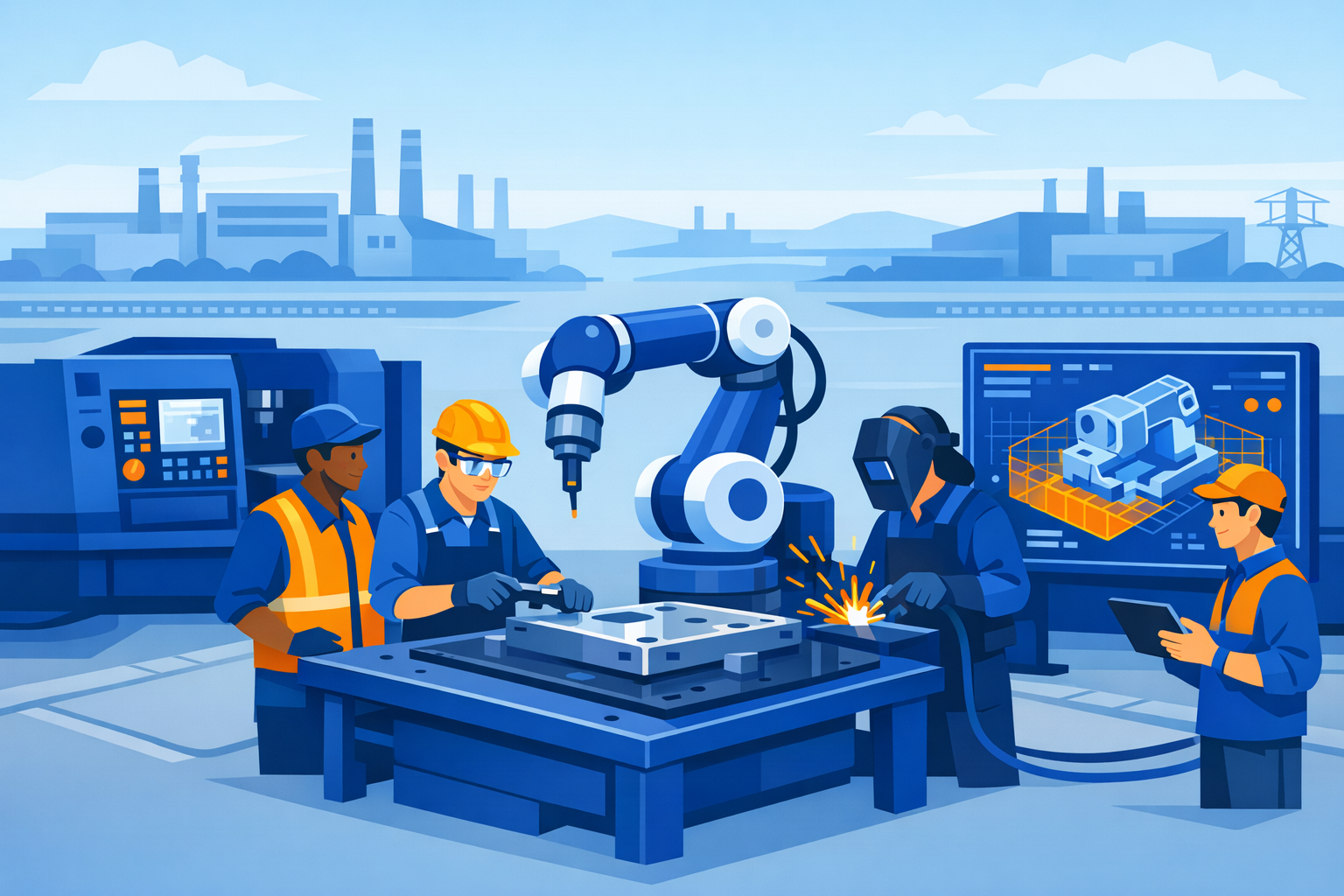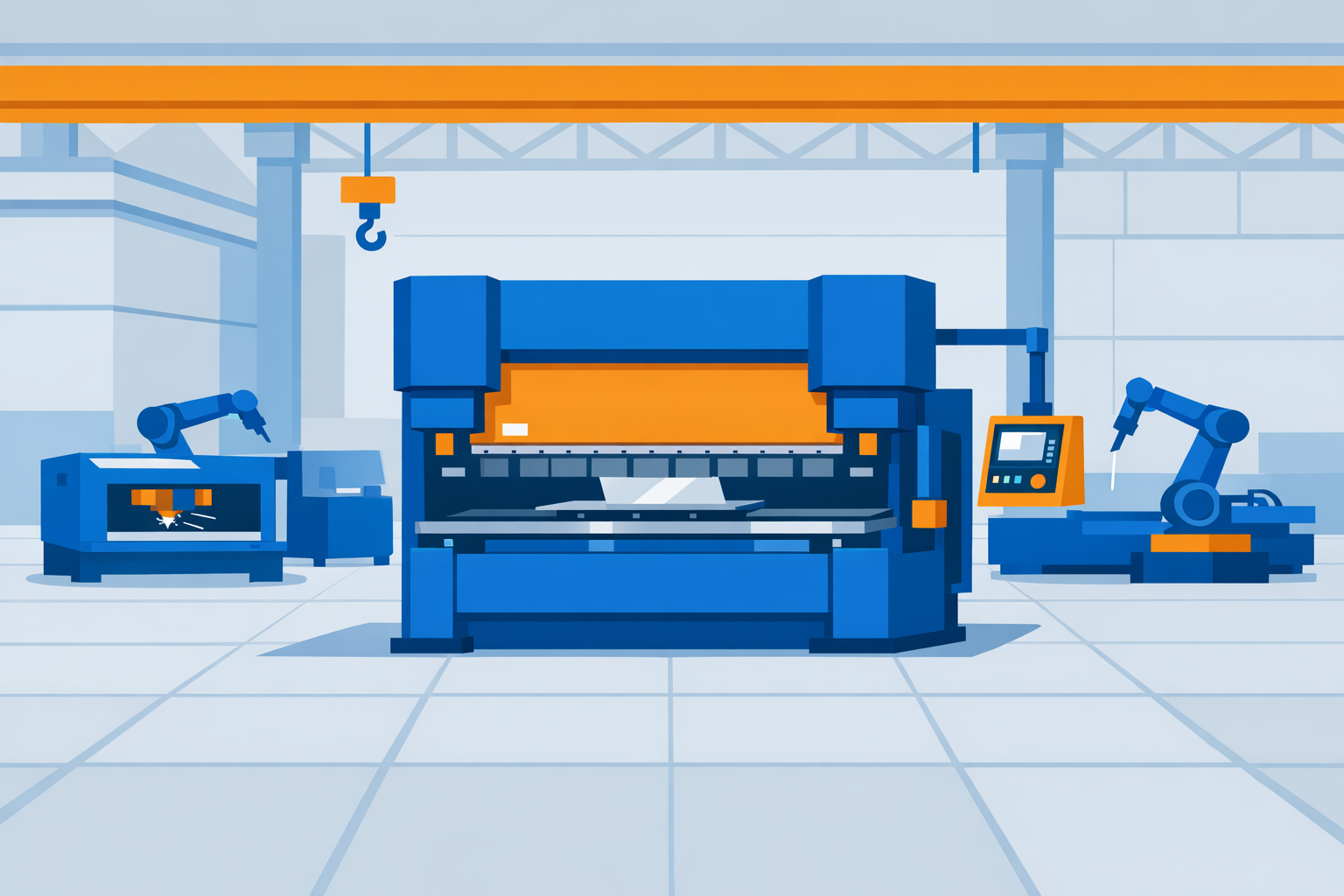
New market research projects the global cutting and bending machine market will nearly double in value over the next decade, driven by automotive lightweighting mandates and accelerating smart factory adoption. According to Future Market Insights, the market is valued at USD 10.2 billion in 2025 and is forecast to reach USD 20.3 billion by 2035, a compound annual growth rate (CAGR) of 7.1%. The expansion marks a sharp departure from the roughly 2.6% CAGR recorded between 2020 and 2024, reflecting a structural step-change in end-user investment rather than a cyclical rebound.
Background
The machinery category-spanning laser cutting systems, CNC press brakes, waterjet units, and tube bending equipment-has long tracked industrial output cycles. The current forecast period, however, is shaped by two converging structural shifts: the global transition to electric vehicles and industrial adoption of Industry 4.0 principles. The automotive sector remains the largest end-use segment, accounting for approximately 28% of global demand, according to IndexBox analysis. Regulatory and OEM-level pressure to reduce vehicle weight through greater use of advanced high-strength steels (AHSS) and aluminum alloys is translating directly into capital expenditure on higher-precision forming and cutting equipment.
On the smart factory side, the integration of Industry 4.0 technologies-including IoT-enabled predictive maintenance and cloud-based bending programs-is enhancing productivity and reducing downtime across fabrication operations, according to IndexBox. Machine builders increasingly compete not only on hardware specifications but also on data analytics platforms, connectivity protocols, and aftermarket service guarantees.
Details
The automotive demand driver is well defined. Automakers and Tier-1 suppliers are replacing older mechanical and hydraulic presses with servo-electric and hybrid bending machines to improve cycle times and energy efficiency, according to IndexBox. The shift to EV platforms introduces specific technical requirements: battery enclosures, motor mounts, and structural reinforcements demand machines with tighter tonnage control, advanced springback compensation, and the ability to handle thinner, stronger materials without dimensional deviation.
The transition from hydraulic to servo-electric and hybrid press brakes offers energy savings of up to 60% and higher cycle speeds, driving replacement demand in mature markets, according to IndexBox. By 2035, machine replacement rates in this segment are expected to rise 30% as older hydraulic units are phased out.
In the automated bending sub-segment specifically, IndexBox estimates a 5.2% CAGR for the global automated bending machine market over 2026-2035, bringing the market index to roughly 165 by 2035. Precedence Research places the U.S. automatic bending machine market at USD 856.8 million in 2025, forecast to reach USD 1.43 billion by 2035 at a CAGR of 5.3%.
Regionally, Asia-Pacific is the fastest-growing geography. China's automated bending machine market is projected to expand at a 7.8% CAGR, while India follows at 7.5%, both driven by manufacturing scale-up and electric vehicle production, according to Future Market Insights. Europe presents a mature replacement market where the EU's green industrial policy is accelerating the phase-out of older hydraulic presses in favor of energy-efficient servo-electric and hybrid CNC machines, per IndexBox. North America's growth is tied to reshoring trends, defense spending, and demand for connected, automated bending solutions that address skilled labor shortages on the shop floor.
Access constraints for small and mid-sized fabricators remain a notable headwind. High initial capital expenditure and long payback periods for advanced CNC and robotic bending cells continue to limit adoption among smaller operations-a gap that machine builders and financial intermediaries are beginning to address through rental, leasing, and vendor-financed programs structured around total cost of ownership rather than upfront price.
Outlook
By 2035, the cutting and bending machine market is expected to become more concentrated, with the top five players accounting for over 45% of global revenue, while niche suppliers focus on specialized applications such as medical device fabrication and micro-bending, according to IndexBox. Fabricators evaluating capital equipment decisions over the coming years will need ROI models that incorporate lower scrap rates, faster changeovers, and energy cost reductions-not just acquisition price. Trade policy uncertainty, particularly tariffs on capital goods imports between the U.S. and China, continues to inject risk into cross-border supply chains, prompting some machine builders to regionalize production capacity ahead of the forecast period's peak demand years.