A coordinated wave of regional automation training hubs and public-private workforce partnerships is accelerating upskilling across the metal fabrication sector, as industry data project automation levels in industrial manufacturing to more than double by 2030. The push comes as fabricators confront a structural labor crisis that existing recruitment pipelines have failed to resolve, while capital investment in robotics, collaborative systems, and AI-assisted inspection continues to climb.
Background
The urgency behind these initiatives is rooted in converging data. According to PwC's Global Industrial Manufacturing Sector Outlook, released in February 2026 and based on a survey of 443 senior executives across 24 territories, the share of industrial manufacturers expecting to highly automate key processes by 2030 will more than double, rising from 18% to 50%. Among "future-fit" manufacturers-the fastest and most innovative 20% identified in the survey-the share of highly automated processes is expected to climb from a current median of 29% to 65% by 2030.
The labor constraint is equally stark. The Manufacturing Institute has reported that the U.S. manufacturing sector could face a shortfall of 2.1 million skilled workers by 2030. In metal fabrication specifically, the industry currently faces a deficit of approximately 375,000 skilled welders, making automation a complement to human labor rather than a replacement. The National Association of Manufacturers estimates that manufacturers will need to fill 3.8 million jobs over the next decade.
Details
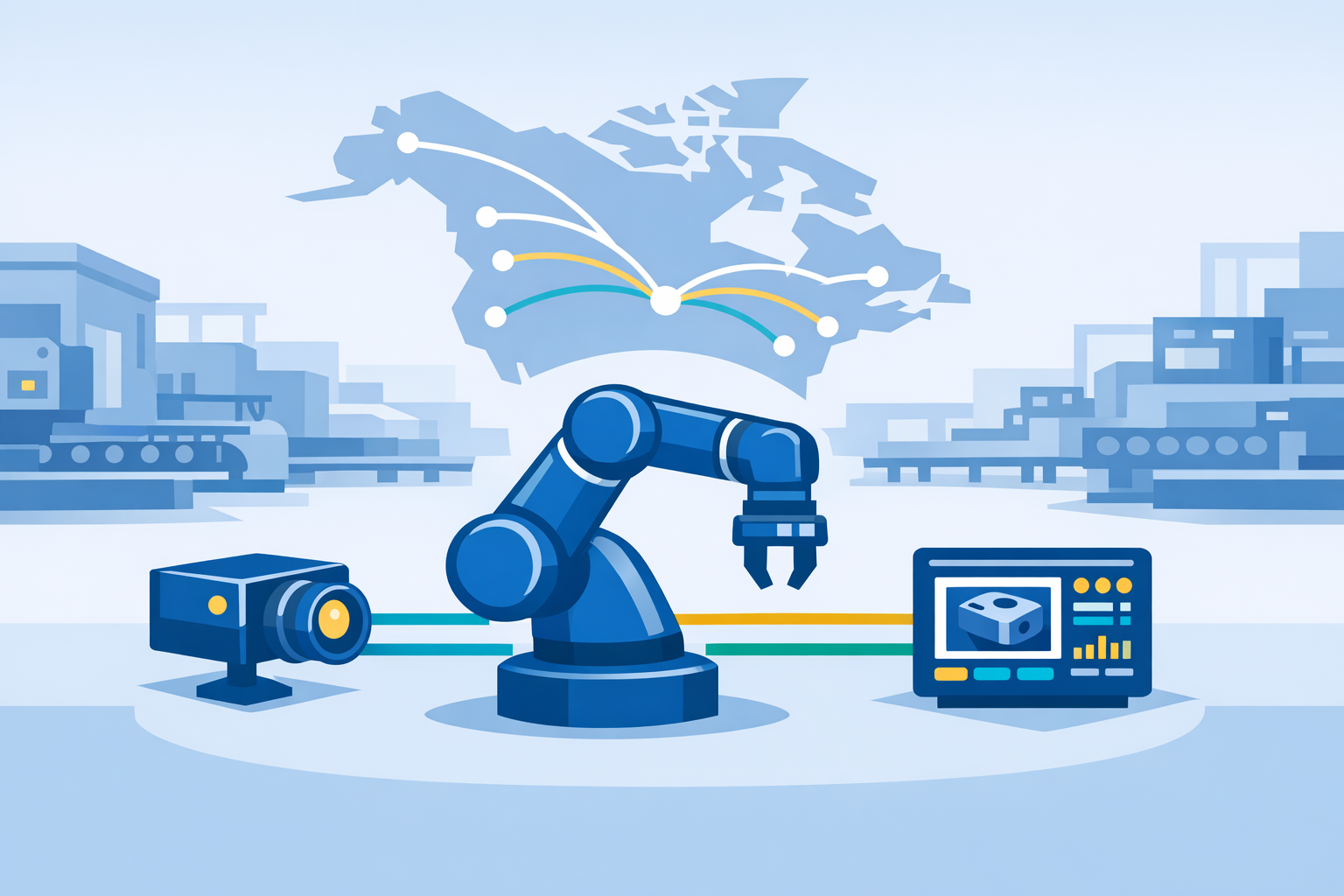
Regional infrastructure is mobilizing to close that gap. The ARM (Advanced Robotics for Manufacturing) Institute, a public-private Manufacturing USA innovation collaborative, has expanded its Robotics Manufacturing Hub to help small and medium-sized manufacturers implement robotics and AI. In 2025, the ARM Institute's Automation Services program completed 48 site visits, developed 27 tailored automation solutions with a 50% implementation rate, and catalyzed $1.25 million in related investments while supporting 21 defense suppliers. As of 2026, the Pittsburgh-based hub is extending grant-funded services to commercial manufacturers through September 2026.
Curriculum alignment is central to the hub strategy. In 2025, the ARM Institute built an AI competency framework through member collaboration and is working to expand RoboticsCareer.org-developed with 300 industry partners-to include AI-specific jobs and training programs. In 2025, 10 new training programs earned ARM Institute Endorsement, with a further Education and Workforce Development Project Call issued in January 2026. RoboticsCareer.org recorded over 119,000 visitors in 2025, listing more than 16,700 training programs and supporting over 1,500 job connections.
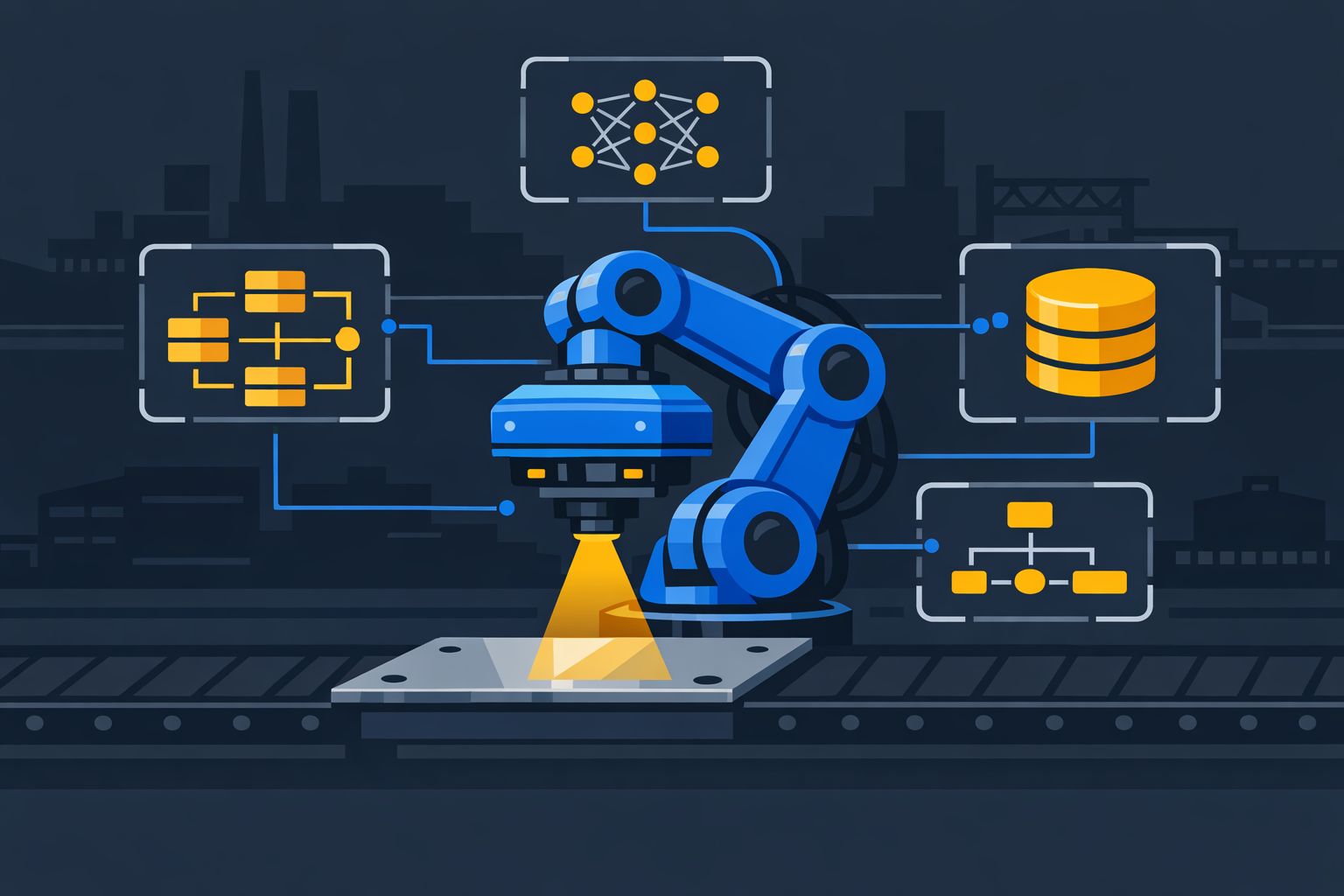
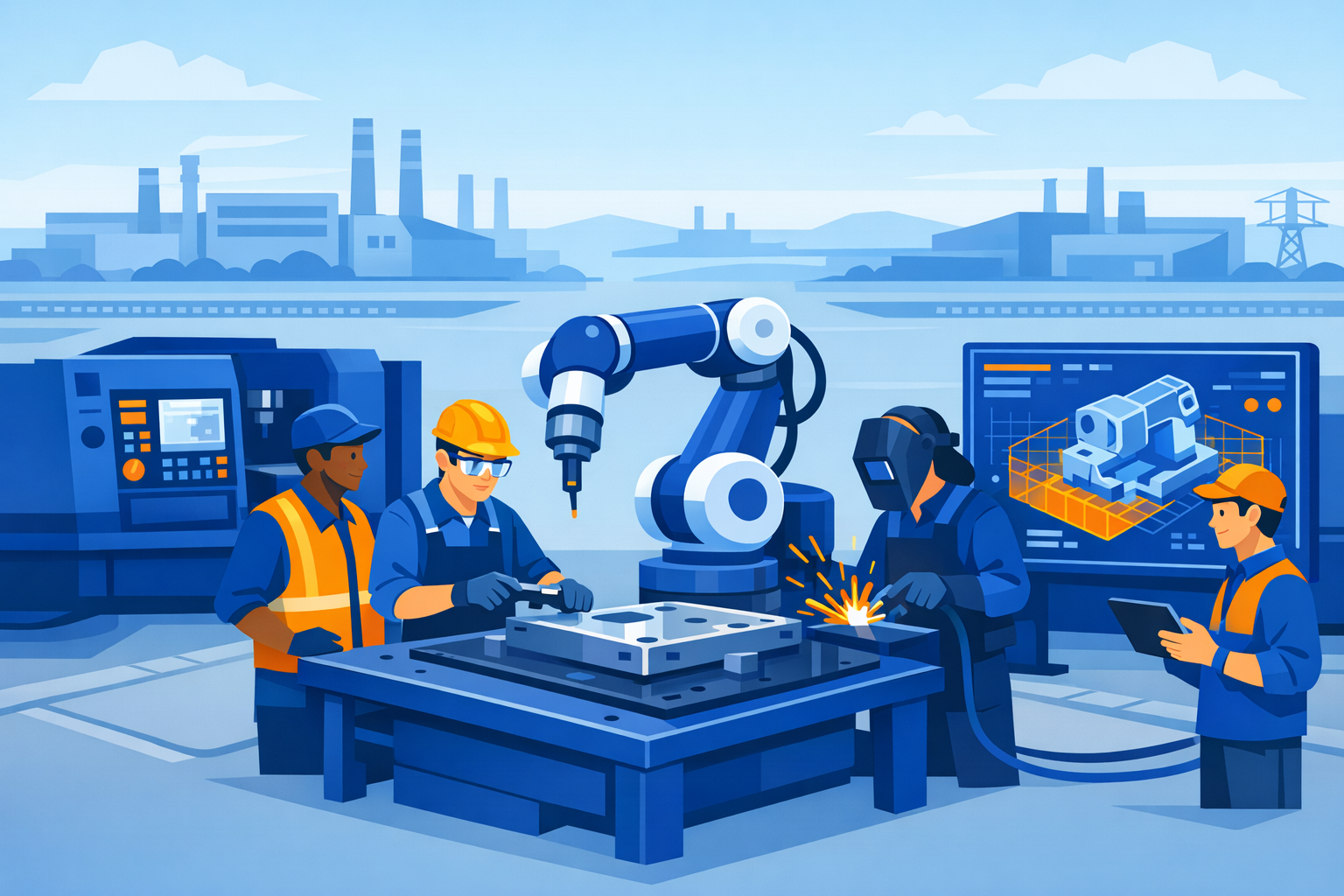
Training programs at the hub and partner institutions focus on hybrid technical roles that combine traditional fabrication craft with digital fluency. In sheet metal and structural fabrication, these roles are shifting toward cobot supervision, AI-assisted quality inspection, CNC programming, and real-time data interpretation. Digital twins and simulation environments are being deployed to let employees train virtually before working with physical equipment, while AI tools are emerging to guide frontline workers in real time and identify performance gaps.
Industry-academic collaboration is broadening those efforts nationally. The University of Alabama at Birmingham recently partnered with the Metallurgical Engineering Trades Apprenticeship & Learning (METAL) program, supported by the U.S. Department of Defense's Innovation Capability and Modernization (ICAM) Office, to develop a national training network for the base metals workforce through 2050, with curriculum spanning automation, casting, forging, and heat treatment of ferrous and non-ferrous alloys.
Wage data underscore the economic case for upskilling. According to 2025 data from Comparably Inc., entry-level robotics technicians in manufacturing earn approximately $70,000 per year, while advanced robotics integrators with the highest level of training and experience average $150,000 annually.
Outlook
The ARM Institute expects to release a casting and forging automation roadmap in 2026-developed with manufacturers, defense suppliers, robotics companies, and government stakeholders-that is anticipated to inform new funding initiatives for modernizing those fabrication processes. PwC's survey signals that the divide between automation leaders and laggards will widen further, as fabricators that have not yet engaged robotics at scale face mounting competitive pressure. The trajectory suggests that regional hubs capable of integrating capital investment with accelerated workforce credentialing will determine whether fabricators can maintain production capacity as automation deployment intensifies through the end of the decade.
Previously covered on this site: Vision-Guided Automation Reshapes High-Mix Metal Fabrication and US Funds Drive Automation Uptake in Small Metal Shops.