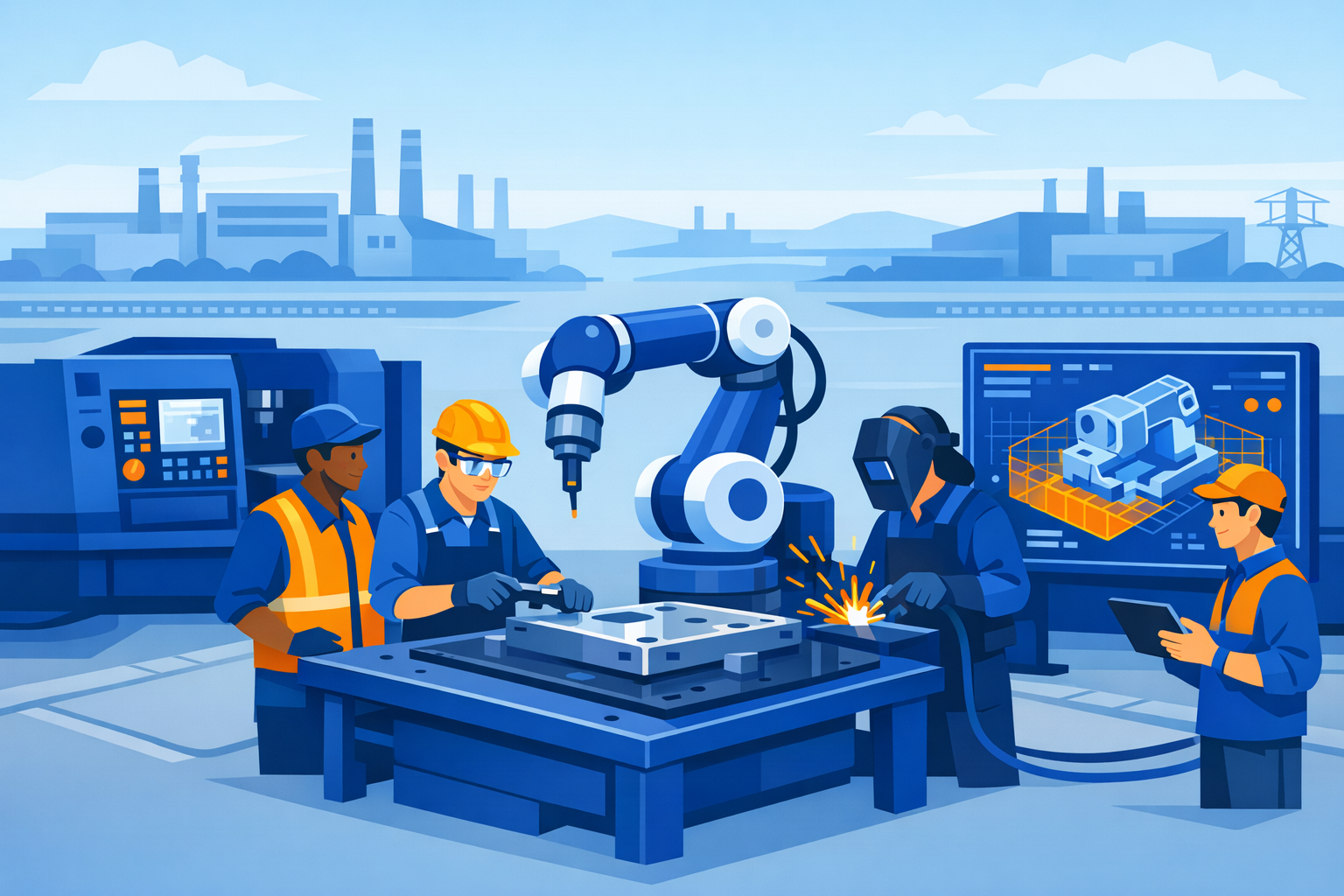
Vision-guided, AI-assisted robotic systems are transforming high-mix metal fabrication workflows, delivering improvements in throughput, consistency, and workforce adaptability. Manufacturers in sectors such as automotive and electronics are deploying vision-guided systems to handle weld programming, part sorting, assembly positioning, and real-time error correction. These systems reduce programming complexity and enhance quality. Early adopters report significant reductions in cycle times and rework, along with faster integration into production operations.
Background
Industrial fabricators continue to face skilled-labor shortages, especially among welders, alongside increased demand for high-mix, low-volume runs. These trends are accelerating adoption of vision-guided automation, where integrated cameras and AI allow robots to identify parts and dynamically adapt workflows, minimizing the reliance on fixed tooling. Traditional robotic cells required extensive programming and tooling for each job; advanced vision systems have lowered these barriers, supporting Industry 4.0 initiatives and agile manufacturing.
Details
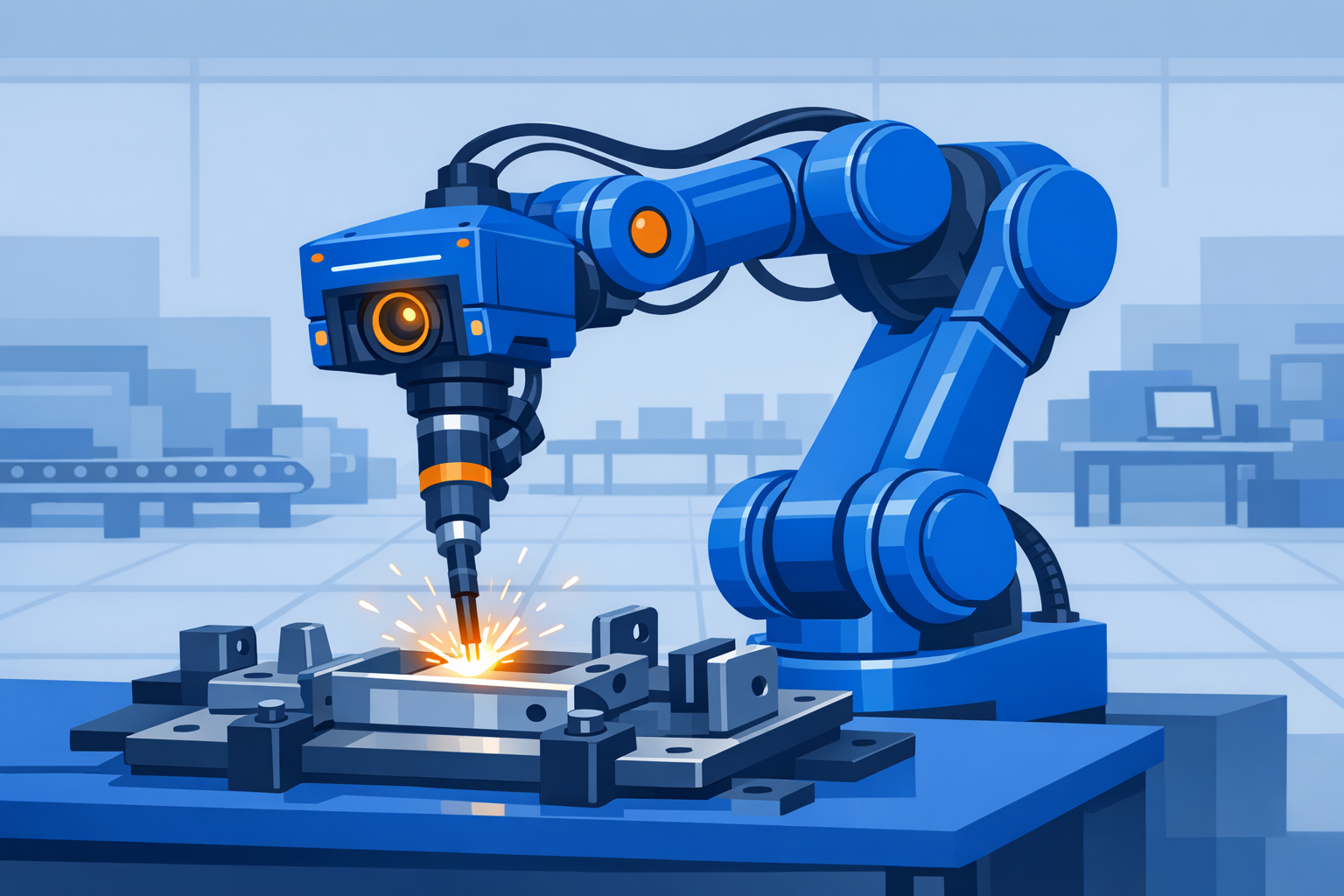
AI-powered vision systems in metalworking can automatically program weld paths, track seams, and adjust torch orientation in real time. This enables automation of high-mix, low-volume tasks with minimal setup. One provider reported setup times reduced by up to 70% versus conventional programming. Firms integrating cobots with vision-guided welding have achieved 30-50% reductions in rework rates and notable improvements in first-pass yield. These systems also decrease operator exposure to hazards such as fumes and spatter. In one example, a part that previously required three hours of manual welding was completed by an AI-guided robotic cell in 15 minutes-a 95% reduction in cycle time.
Industry surveys reinforce these outcomes. An Industry 4.0 adoption study found that 47% of metalworking companies reported higher product quality, and 43% noted increased throughput after adopting advanced automation. Another report found that over 65% of firms plan to implement AI within five years. Market analyses project that Europe-driven by Germany's precision-engineering sector-will see a compound annual growth rate (CAGR) of 17-18% in vision-guided robotics, while Asia Pacific is expected to lead with a CAGR above 20%.
Beyond performance, vision-guided systems support workforce development. Operators with limited automation experience can shift from manual programming to system supervision and quality oversight. This encourages upskilling and enables fabricators to sustain production flexibility in dynamic job-shop settings.
Outlook
As vision-guided technologies mature, manufacturers are expected to expand from pilot projects to fully integrated operations, aided by new standards and modular system designs. Growth in high-mix sectors will further drive the integration of vision-AI platforms across existing fabrication cells.