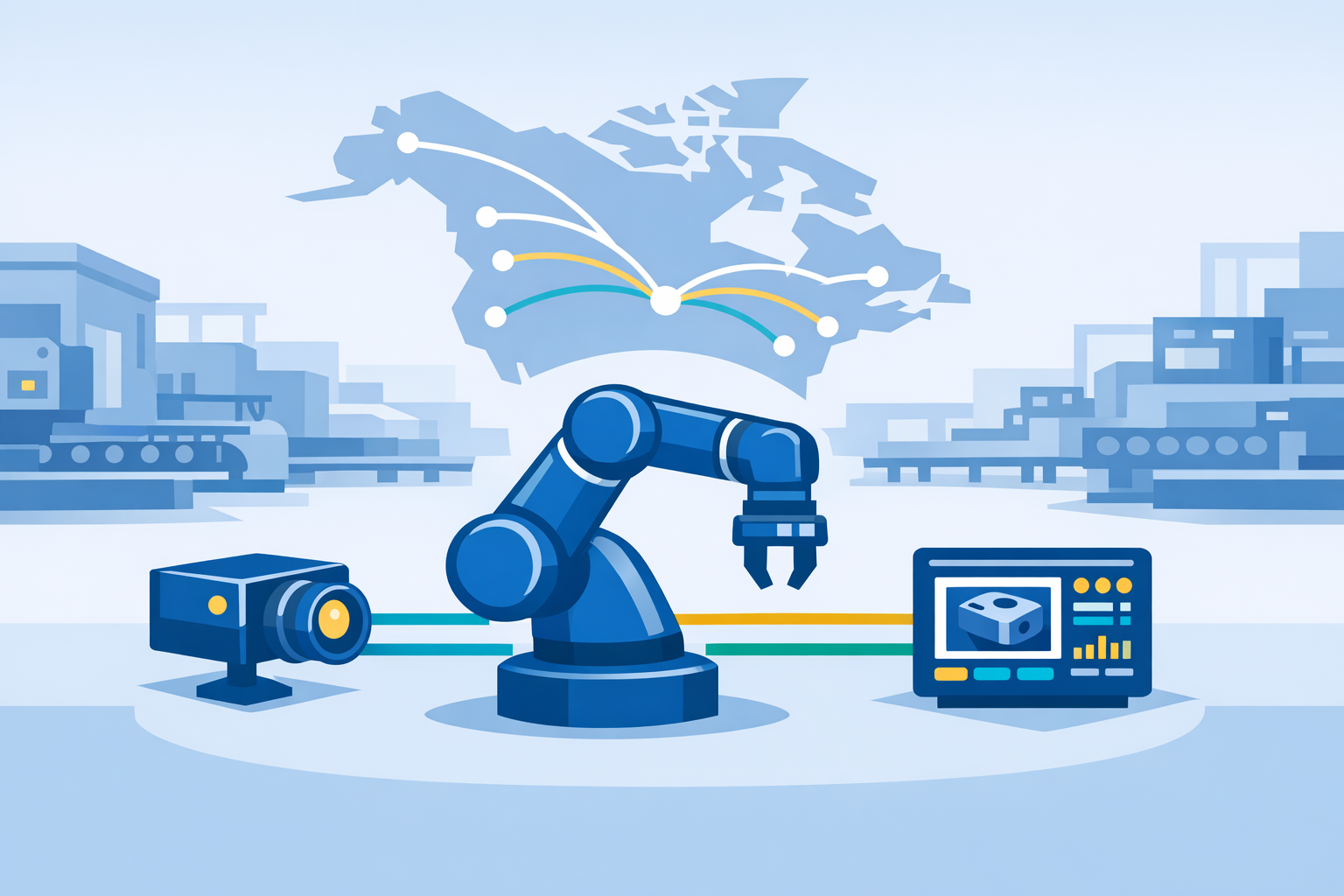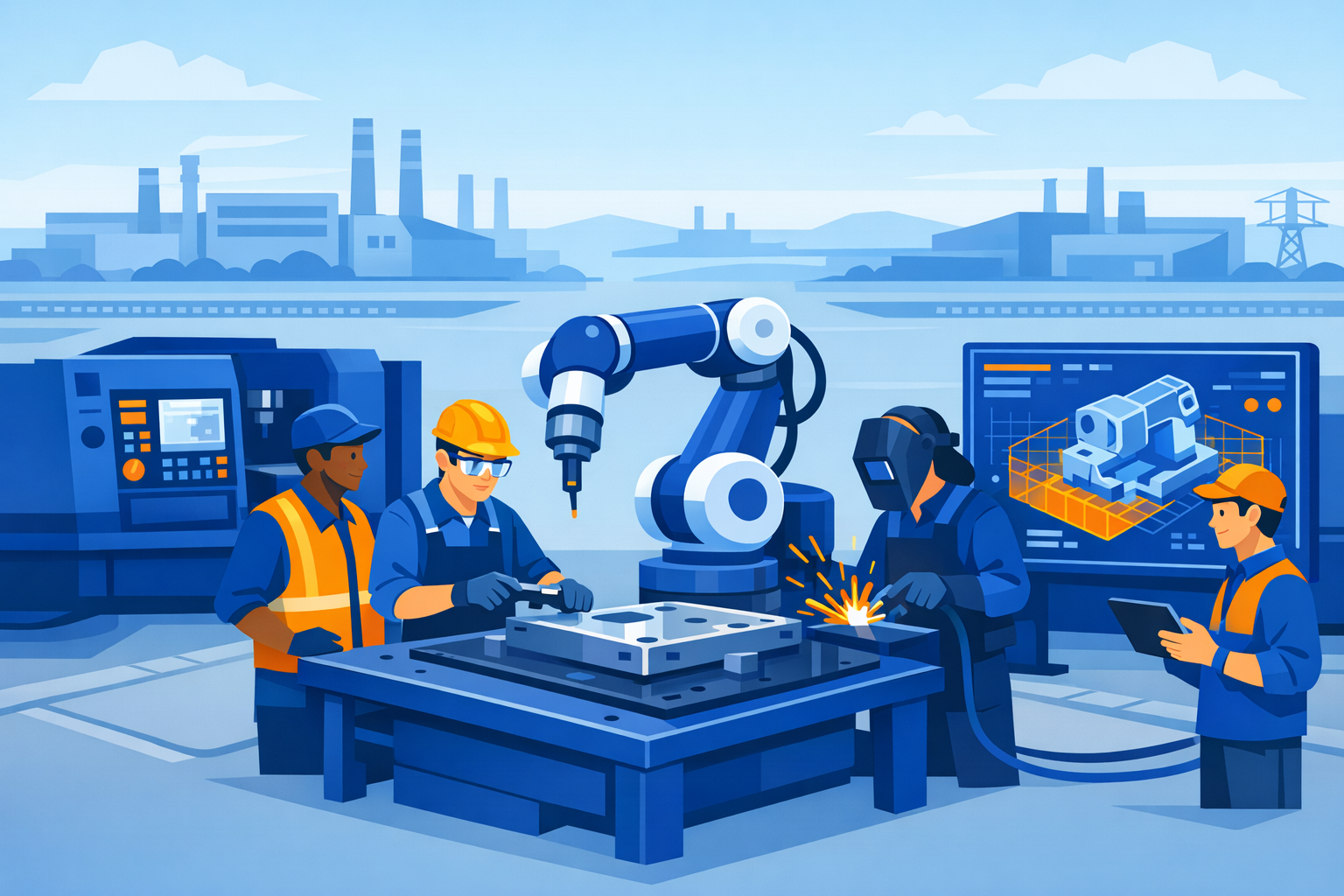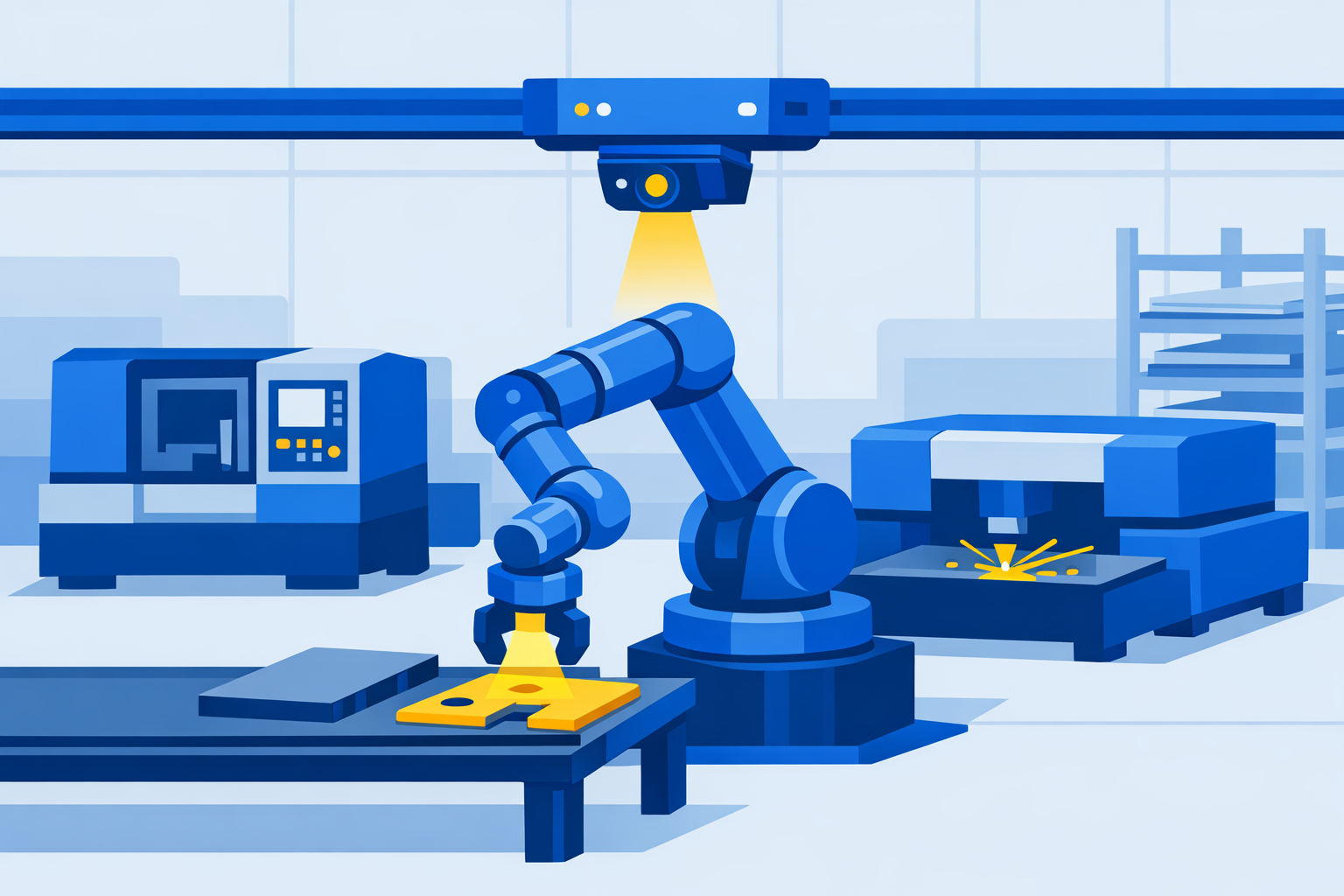
Vision-guided automation is advancing in mid-size and job shops within the metal fabrication sector, driving faster changeovers and improved quality control. By integrating camera-based guidance, AI-enhanced defect detection, and data interoperability across CNC machines, laser cutters, and robotic cells, shops operating in high-mix, low-volume environments are seeing notable efficiency gains. Reported benefits include reduced setup times, better scheduling visibility, and predictive maintenance throughout connected equipment ecosystems.
Background
High-mix, low-volume (HMLV) fabrication has historically challenged conventional automation due to frequent part changes and small batch sizes. Traditional robots often require dedicated cells, robust guarding, and lengthy setup, limiting flexibility and extending return-on-investment timelines beyond two years for many operations Mid-mix shops often delay automation due to setup time outweighing manual cycle time , industry analyses report {{cite:}}. Reviews of machine vision system adoption in small and medium-sized enterprises (SMEs) identify cost, workforce skills, and HMLV complexity as key barriers {{cite:}}.
Details
Camera-based systems are deployed to guide robots and CNC tools through varying part geometries. In one foundry, a vision-guided robot distinguished among eight clutch-housing types using Cognex In-Sight's PatMax technology, communicating part location and orientation to a Fanuc robot via a PLC {{cite:}}. This automation solution replaced two manual operators and achieved ROI within six months, according to Odyssey Machine Company management {{cite:}}.
Recent advances in deep learning further enhance defect detection and flexibility. A study using a large industrial dataset found that anomaly-guided pre-training improved defect detection in metal surface inspection by up to 10% in mean average precision (mAP@0.5) and 11.4% across broader thresholds (mAP@0.5:0.95) compared to ImageNet-based models {{cite:turn0academia14}}.
Collaborative robots (cobots) are also finding use as mobile, flexible automation solutions in high-mix environments. Cobots can move between stations without extensive guarding, accommodate varied tasks such as welding and machine tending, and help overcome traditional one-to-one robot-to-machine constraints {{cite:}}.
Challenges persist. Integrating vision systems into legacy equipment is complex and costly. SME reports cite a shortage of qualified personnel and integration complexity as major obstacles {{cite:}}. Cybersecurity also introduces new risks-AI-enabled systems are susceptible to adversarial attacks and model manipulation, raising concerns over potential production disruptions and intellectual property theft {{cite:}}.
Outlook
Mid-market fabricators are expected to pilot vision-guided automation in targeted weld or CNC cells over the coming quarters, aiming to validate ROI, flexibility, and scheduling improvements before broader deployment. AI model refinement, workforce training, and enhanced cybersecurity protocols will remain critical as adoption expands across job-shop operations.