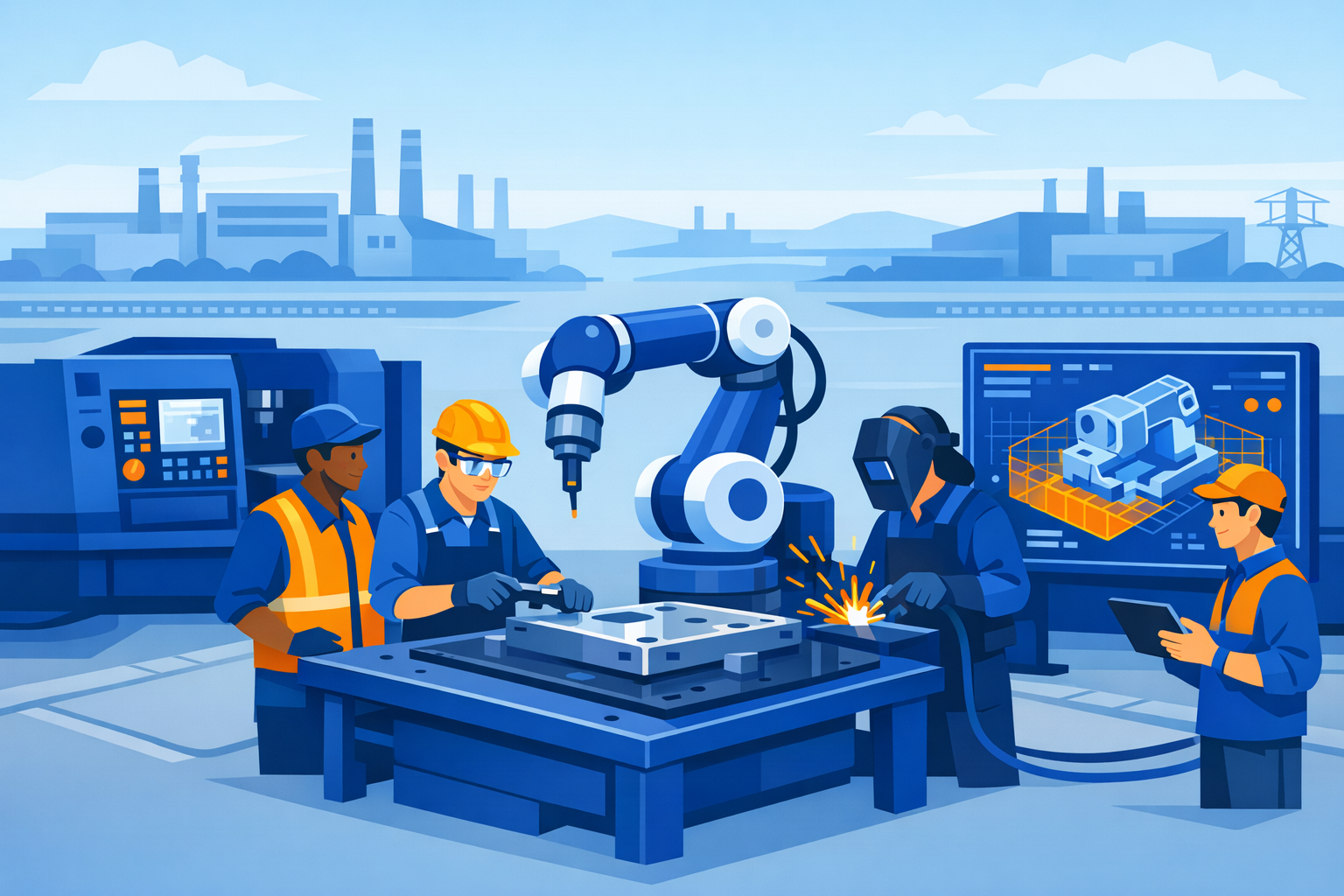
Vision-guided robotics powered by artificial intelligence are reshaping high-mix metal fabrication by increasing throughput, enhancing quality control, and creating new workforce training demands.
Manufacturers in the automotive, aerospace, and machinery component sectors are deploying vision-guided robotic systems to rapidly adapt workflows and detect defects in real time. These systems demonstrate measurable throughput gains and consistent performance across varied product lines. Early results point to substantial returns on investment, altering capital planning, maintenance priorities, and workforce skill requirements.
Background
High-mix, low-volume production is common in metalworking, making flexibility and precision critical. Manual inspection often fails to match demand, missing defects or slowing throughput. Vision-guided robotics integrate machine vision, AI, and automation to manage bin picking, inspection, handling, and welding. Once reliant on extensive programming, these applications now offer rapid deployment and adaptability.
Details
Vision-guided robotics are achieving notable efficiencies: computer vision identifies surface imperfections 30% faster than human inspectors; AI-driven welding robots can triple production capacity compared to manual welding; and bin picking for unstructured metal parts now achieves a 99% success rate[1]. The vision-guided robotics market is projected to grow at a 10% compound annual growth rate through 2026[1].
Return on investment is quantifiable. In metal fabrication, vision AI implementations yield between 180% and 320% ROI, with payback periods of 12 to 20 months[2]. Automated visual inspection systems in broader manufacturing report average annual labor savings of approximately US$691,200 per line and paybacks within six to twelve months[3].
Workforce transformation is a central theme. A smart factory using vision inspection recorded a 31.8% improvement in first-pass yield and a 29.4% reduction in inspection labor costs. Additionally, 43% of staff transitioned to roles such as AI system specialists and vision technicians after more than 3,200 hours of training[4]. Augmented reality guidance elsewhere reduced training times by up to 40%, decreased errors by 65%, and increased new worker productivity by 30%[5].
Capital expenditures remain significant, covering vision hardware, AI software, integration, and training. Nevertheless, lower quality-control costs, reduced rework, and decreased scrap rates support a strong ROI. AI vision systems routinely detect defects with over 99% accuracy, outperforming human inspectors and maintaining performance across shifts[6].
Outlook
As vision-guided robotics become more advanced and autonomous, high-mix metal fabricators are likely to expand deployment in finishing, welding, and inspection operations. Manufacturers are expected to prioritize modular systems with fast redeployment and continue investing in workforce upskilling for data analysis, system monitoring, and preventive maintenance-crucial steps to maximize ROI.