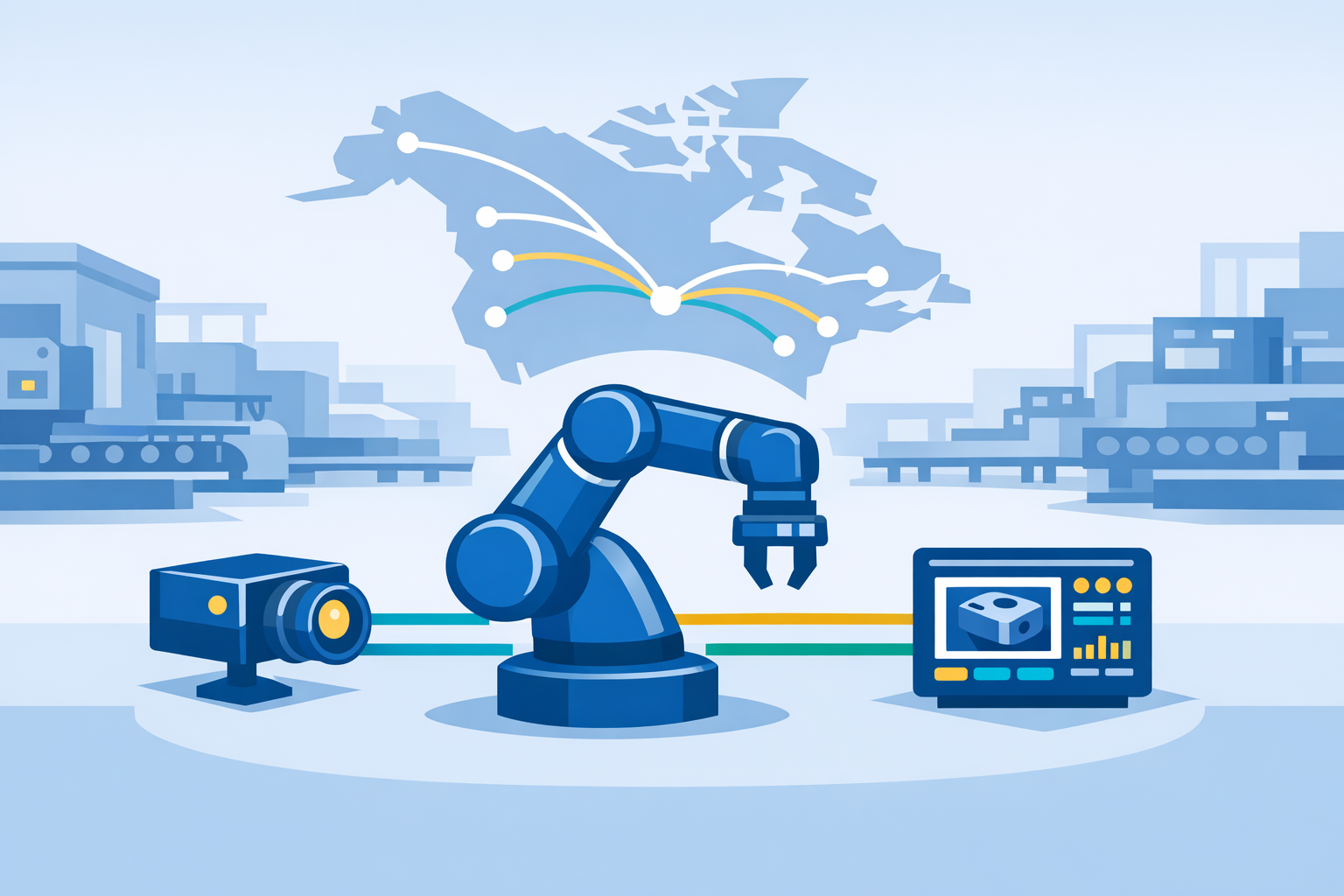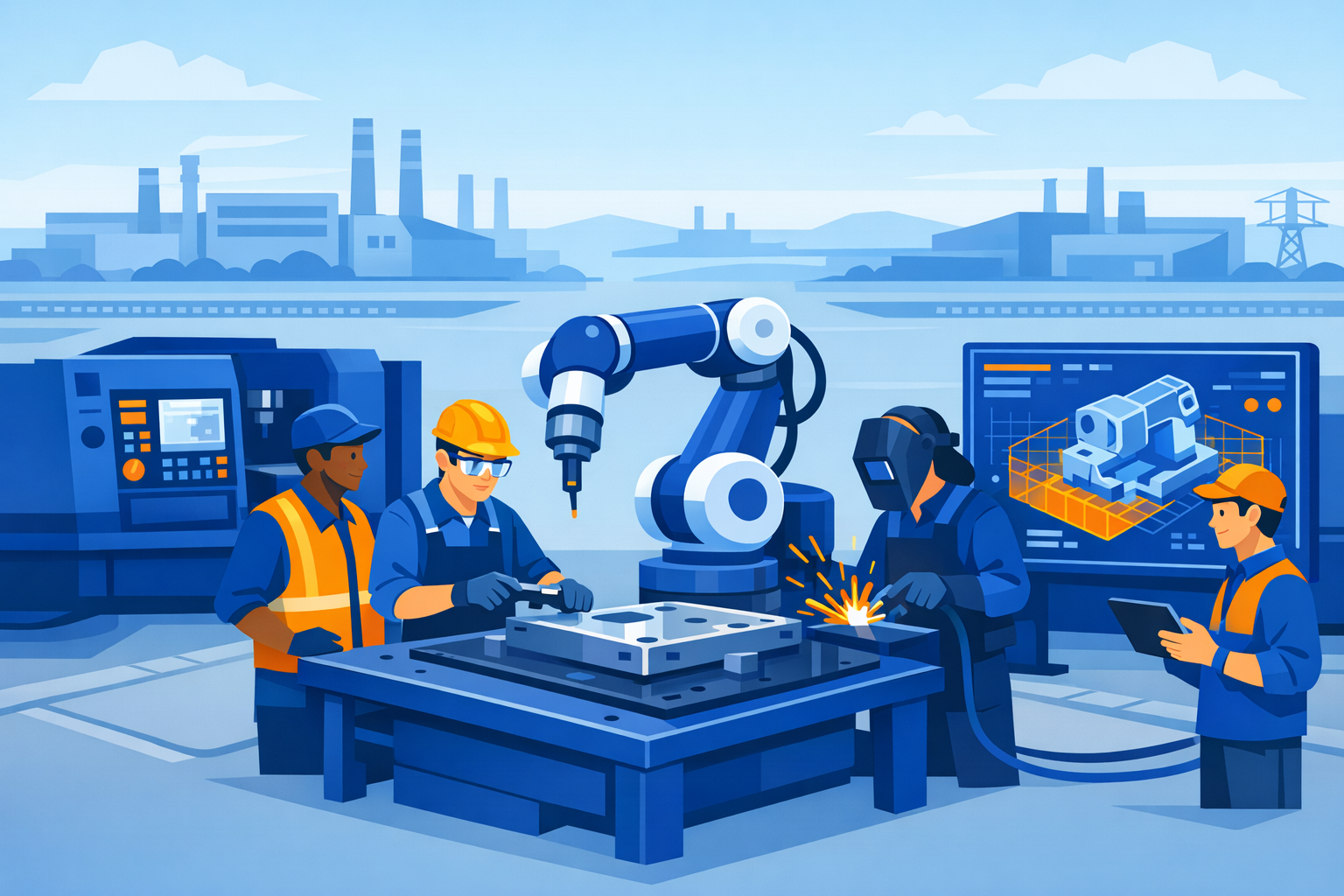
Flex (NASDAQ: FLEX) and Teradyne Robotics announced on April 22, 2026, an expansion of their collaboration to accelerate intelligent automation across global manufacturing. Flex will take a dual role: deploying Teradyne Robotics solutions within its own production facilities while manufacturing key robotics components that enable scalable automation for Teradyne Robotics customers worldwide. The move has drawn attention from system integrators and mid-market manufacturers as a signal that cross-vendor, platform-based automation ecosystems are approaching commercial viability.
Background
The expanded relationship builds on a 20-year partnership originally centered on manufacturing Teradyne semiconductor test equipment, now extending into intelligent automation. Teradyne's parent company has long supplied automated test systems used in chip manufacturing, where precision, throughput, and reliability are essential.
Teradyne Robotics brands Universal Robots (UR) and Mobile Industrial Robots (MiR) play a central role in the partnership. Flex manufactures key components for UR while deploying its collaborative industrial robots (cobots) and MiR autonomous mobile robots (AMRs) across Flex production environments. Flex operates more than 100 facilities in 30 countries, managing what it describes as 80% of the critical power and compute requirements for global data centers, supported by 140,000 employees and 16,000 suppliers.
For the broader metalworking and fabrication sector, the announcement arrives as manufacturers confront a persistent structural challenge: ERP-Industry 4.0 integration offers significant potential for operational efficiency, supply chain resilience, and automation capabilities, but it also introduces complexity around data security, interoperability, and workforce readiness. Some MES solutions lock customers into proprietary technology or limited integration paths, and these rigid architectures hinder adaptation to new machines, protocols, or business needs.
Details
The combination of manufacturing and real-world deployment is designed to provide continuous operational feedback, validating robotics technologies at scale and enabling faster replication of successful automation workflows. As part of its work to advance next-generation automation, Teradyne Robotics is integrating emerging physical AI technologies into its cobots and AMRs to help manufacturers address growing operational complexity.
"For more than 20 years, Flex and Teradyne have partnered to deliver semiconductor equipment at global scale," said Dennis Kirkpatrick, President of Lifestyle, Consumer Devices, and Core Industrial at Flex. "Expanding our relationship into robotics and intelligent automation builds on a strong foundation, combining Teradyne Robotics' industry-leading technologies with Flex's advanced manufacturing capabilities, global footprint and execution expertise," Kirkpatrick added.
"Flex's experience in manufacturing complex products across industries, combined with its global scale and resilient supply chain, makes it an ideal partner for advancing intelligent automation," said Jean-Pierre Hathout, President of the Teradyne Robotics Group, adding that the companies are "accelerating the adoption of robotics technologies that improve productivity, flexibility and operational resilience across manufacturing environments worldwide."
Rodrigo DallOglio, President of Operational Excellence and Transformation at Flex, stated that working with Teradyne Robotics "allows us to scale intelligent automation while supporting increasingly complex manufacturing environments for customers in electronics, industrial equipment, data center infrastructure and other critical sectors."
The ecosystem implications extend to how smaller manufacturers approach automation adoption. Traditional automation systems often demand significant upfront investment and are difficult to modify once installed. The Flex-Teradyne approach instead emphasizes adaptability - systems can be deployed incrementally, tested in real environments, and then replicated across facilities. For plant managers evaluating interoperability standards, standards-led interoperability is increasingly a prerequisite for scalable and auditable manufacturing operations. Manufacturers implementing modular MES solutions report OEE gains of 1 to 2% in the short term, with improvements reaching 10 to 12% within one to two years as systems scale, according to industry data.
Outlook
For the broader industrial sector, the partnership serves as a test case for whether advanced manufacturing combined with AI-driven robotics can bridge the gap between experimental automation and global operational consistency. The announcement does not detail specific systems, volumes, or customer programs, but it signals deeper industrial alignment around physical AI. As robotics and AI platforms mature, attention is shifting toward the supply chains, manufacturing processes, and deployment models needed to sustain commercial growth. For mid-market fabrication facilities weighing capital allocation, the Flex-Teradyne model - where the same partner builds and operates the technology - may become a reference architecture for evaluating automation vendors' long-term credibility and integration depth.