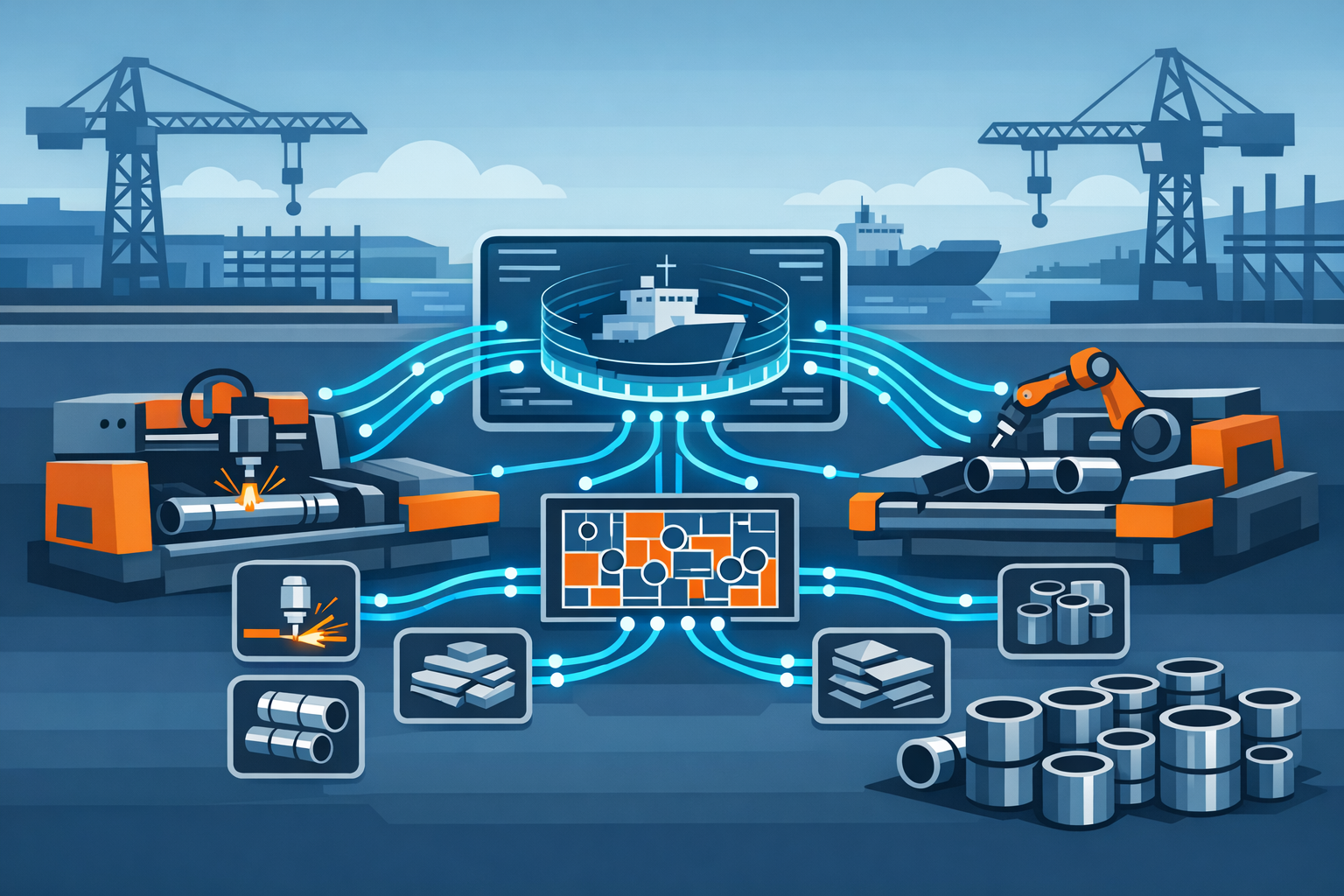
Helsinki Shipyard and PipeCloud partnered with AVEVA to implement a fully automated, data-driven pipe spool fabrication workflow, signaling a move toward integrated smart shipyard operations.
In early 2026, the collaboration launched a fabrication pipeline that converts engineering data from AVEVA E3D into executable workflows via PCF export. The automated system manages work-effort estimation, production planning, CNC program generation, and real-time progress monitoring. It also introduced advanced remnant management and optimized cut nesting, reducing material waste by approximately 10% and enhancing traceability and sustainability throughout the AVEVA platform . The advancement was reported at AVEVA World events in Milan, highlighting increased industry interest in fabrication automation .
Background
Digital twin technology and automation are gaining momentum in shipbuilding and fabrication. Industry research documents the use of IoT-enabled bidirectional digital twins in shipyard workshops for steel cutting, welding, and assembly. These systems enable real-time visualization, predictive maintenance, and process optimization. However, adoption faces challenges including fragmented standards and cybersecurity risks [1]. Proposed frameworks for digitizing fabrication lines-such as pipe spool production-indicate that digital threading and state-based modeling can identify production bottlenecks and improve lean manufacturing [2].
Details
Helsinki Shipyard's deployment exemplifies advanced digital integration in metal fabrication. The process imports design data directly from AVEVA E3D via PCF, allowing automated downstream workflows such as effort estimation, CNC programming, and production monitoring. Smart remnant material strategies and nesting algorithms achieved a material usage reduction of about 10%, ensuring full traceability across the digital workflow [3].
Industry analysis notes that digital solutions are now commonly extracting data from CAD or PCF files to automate programming, planning, and compliance documentation in maritime pipe fabrication. These technologies eliminate manual data entry, enhance traceability of material sources, welding parameters, and non-destructive testing records, and facilitate audit readiness without extra documentation [4].
Outlook
With increased adoption of digital twin-enabled workflows, the maritime fabrication sector is poised for widespread gains in productivity, safety, and material efficiency. The scaling of these solutions depends on standardized data formats and system interoperability across different suppliers and sites. Regulatory bodies and classification societies are likely to align audits and documentation processes with automated systems, driving further integration through compliance incentives.