High-mix metal fabrication shops are posting measurable ROI from vision-guided robotic cells, but the path from pilot to full production scale is increasingly blocked by data governance gaps, cybersecurity exposure, and MES/ERP integration debt - not the vision technology itself.
Background
High-mix, low-volume manufacturing has historically resisted automation. Traditional industrial robots demand specialist engineers, complex code, and lengthy integration cycles, making them impractical for operations running dozens or hundreds of SKUs with variable geometries - a persistent gap between job shops and high-volume lines. That barrier is now eroding. Three converging forces drive the shift: AI vision platforms that eliminate manual programming, tightening skilled-labor markets, and ROI timelines short enough to satisfy capital committees.
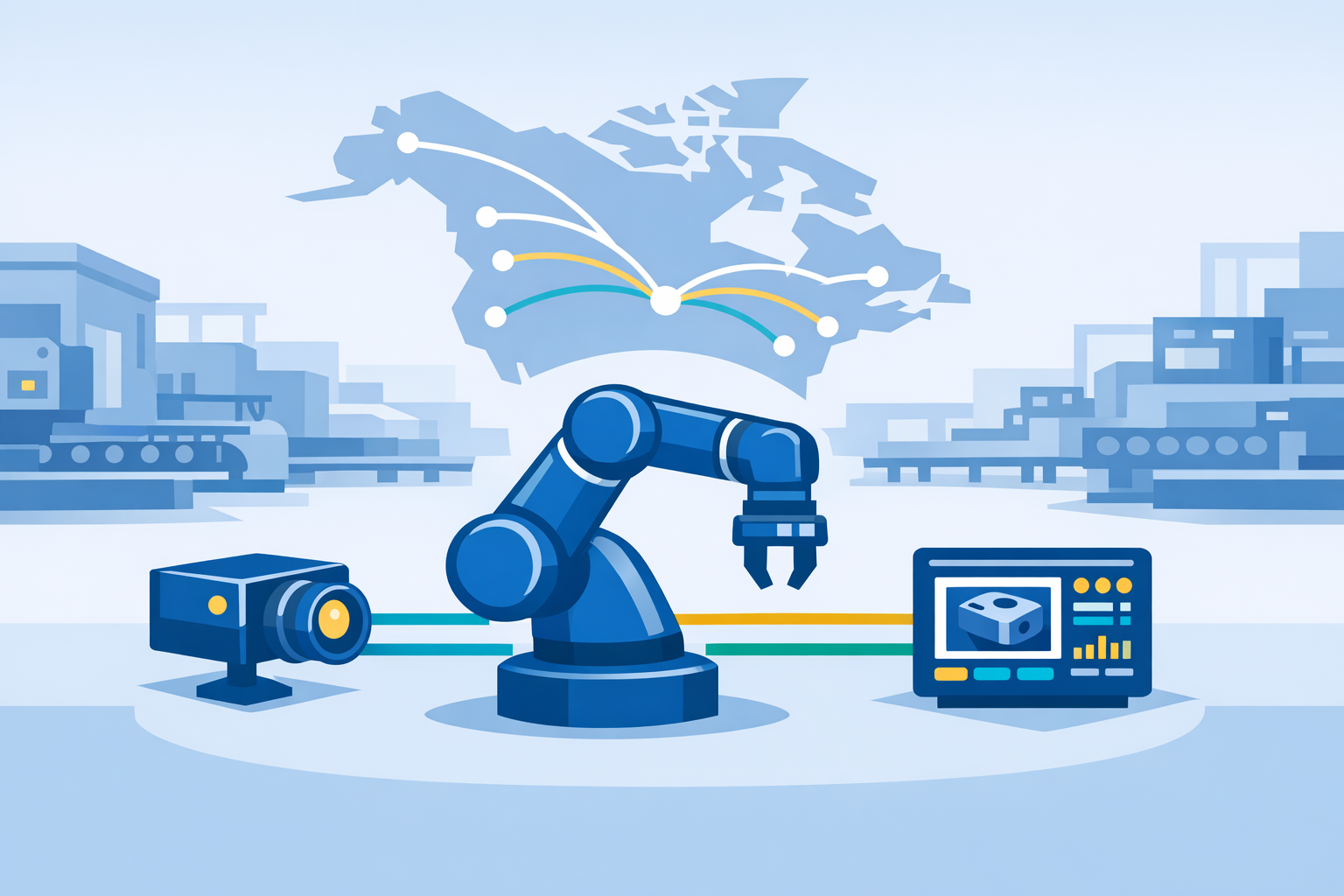
The global machine vision market is expected to grow from USD 15.83 billion in 2025 to USD 23.63 billion by 2030, at a CAGR of 8.3%, according to MarketsandMarkets. Robotics industry analysts report that up to 53% of manufacturers - particularly SMEs - are in the early phases of industrial robot adoption, citing lack of expertise and limited time as primary constraints.
Details
Early performance data from integrators and researchers confirm that the technology delivers when deployed correctly. SMEs in metal fabrication have implemented vision-guided robotics in high-mix, low-volume production cells, achieving return on investment in less than one year.[1] ROI estimates range from two to ten months when cobots replace manual labor valued at approximately US$60,000 per year. Complete cobot and vision system setups may cost US$75,000 or more, depending on sensor and tooling requirements. Operator training typically takes two to five days per person, while integration expenses often comprise 20 to 50% of the robot's base cost.
On quality metrics, smart vision hardware paired with AI-powered algorithms now detects defects with 97% accuracy compared to 85 to 90% from traditional methods, and machine vision systems running around the clock are documented to cut rework by 30 to 50%.
Real-world installations illustrate how the technology operates at the process level. In high-mix metal fabrication, Dutch automation developer Teqram has demonstrated how proof-of-concept work transitions to production reality. Vision-guided grinding and deslagging cells installed at Accurate Metals in Rockford, Illinois, and at Tosec BV in the Netherlands use overhead cameras for wide-area orientation combined with end-of-arm scanners for part-specific geometry acquisition - no manual teach-pendant programming required.
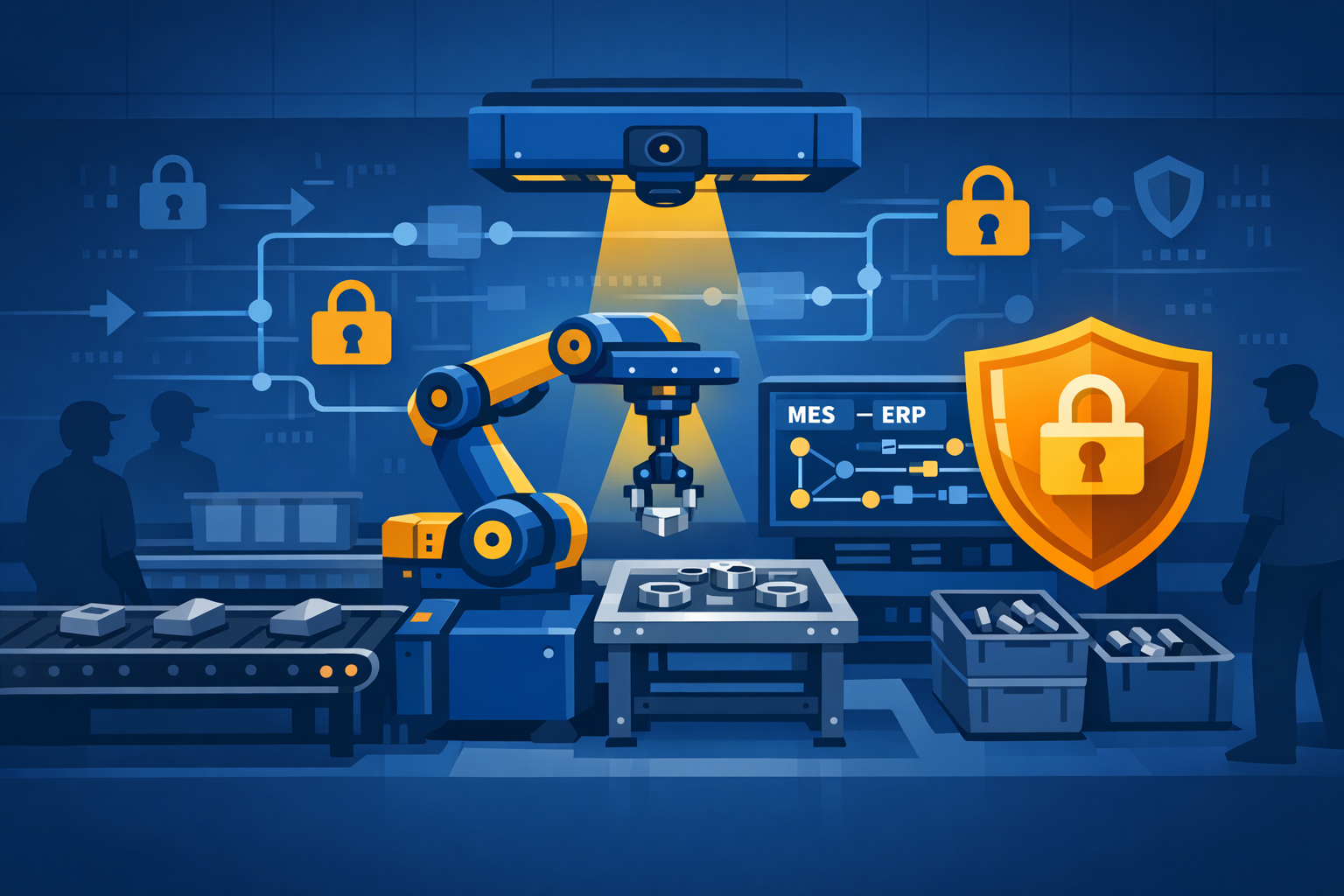
ERP and MES integration is now a hard requirement for production-grade deployments, not an afterthought. Connecting with existing MES and ERP platforms poses significant challenges for SMEs. Adoption of standard communication protocols enables seamless bidirectional workflows: production orders transfer directly to robotic cells, while real-time performance metrics flow upstream to inform scheduling and inventory. Protocols such as OPC UA and MQTT are increasingly cited as baseline requirements for new cell installations.
Cybersecurity is emerging as a critical constraint on deployment velocity. As vision cameras and inspection nodes become networked OT assets, OT-targeted cyberattacks have become a persistent trend in 2025, with attackers exploiting unpatched vulnerabilities in exposed industrial devices. Manufacturing has been the most targeted industry for the last four years, according to IBM's X-Force 2025 Threat Intelligence Index, with a high volume of ransomware attacks involving extortion and data theft.
Procurement teams at larger manufacturers now require Software Bills of Materials (SBOMs) from vision platform vendors. CISA, NSA, and 19 international partners have published joint guidance encouraging SBOM adoption across sectors to strengthen software supply chain transparency and security. Shops supplying Tier 1 and OEM customers face escalating contractual pressure to demonstrate compliance with ISA/IEC 62443 operational technology security standards alongside traceability mandates for inspection data.
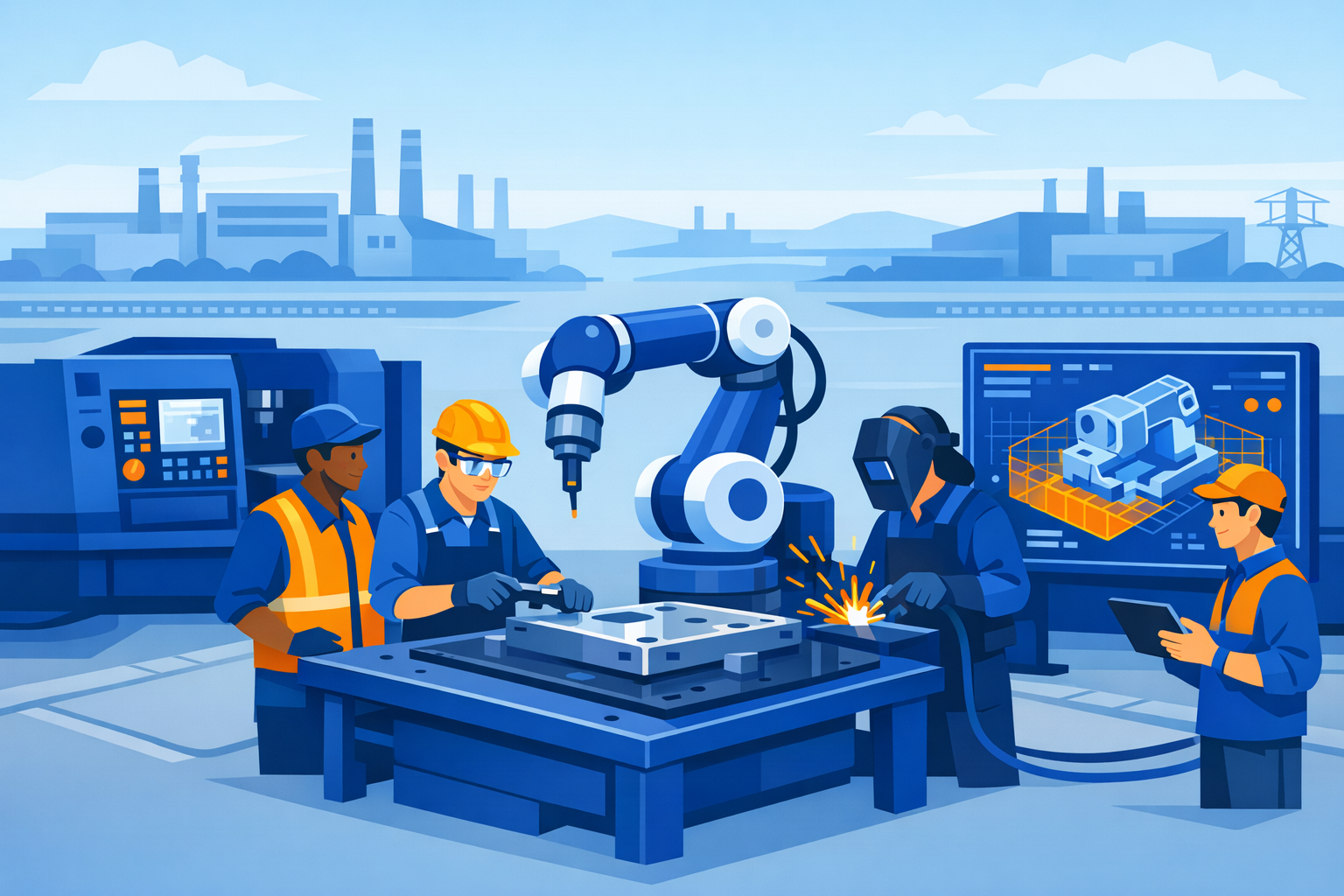
Workforce transformation is the third pressure point. As automation, analytics, and AI reshape the shop floor, required skill sets are changing. Digital twins and simulation tools now allow employees to train virtually before operating physical equipment. AI copilots guide technicians in real time, improving accuracy and safety. Fabricators need workers who understand both mechanical systems and digital tools.
Outlook
Products will need to be designed with lifecycle-long cyber resilience, incorporate structured risk assessments for AI functions, and meet updated machinery compliance requirements that now formally address both AI and cybersecurity. As these rules take effect, suppliers and machine builders face greater expectations for documentation, validation, and ongoing support - particularly when the EU Cyber Resilience Act and Machinery Regulation become mandatory in 2027. As SMEs gain experience with vision-guided cobots, ROI periods are likely to shorten further. Broader adoption of standardized integration frameworks for vision, robotics, and MES may reduce future implementation complexity.