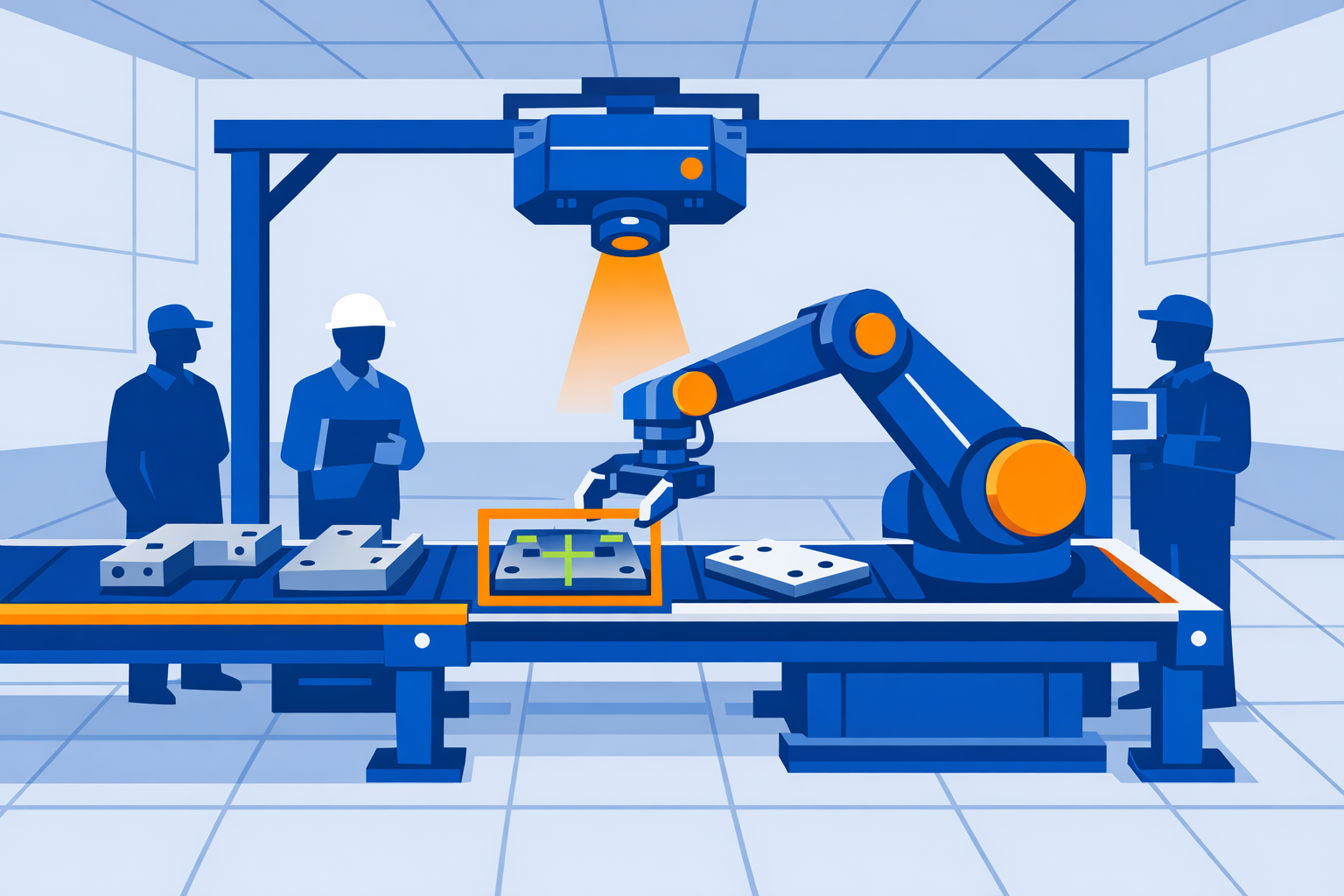
A rising number of small and mid-sized metal fabrication shops are implementing vision-guided robotic cells to reduce changeover times, improve per-lot quality, and enhance traceability. These systems also support stronger return on investment. However, shops face persistent challenges integrating robotics with legacy equipment and addressing workforce training requirements.
Background
Vision-guided robotics combine industrial robot arms with machine vision, enabling automated part detection, positioning, and inspection. Shops face mounting pressure from high-mix, low-volume production and increased customization. Research shows that vision systems can eliminate the need for dedicated fixturing, resulting in faster return on investment and increased setup flexibility. Reducing setup time directly benefits productivity and cost efficiency. Sector studies highlight four main adoption barriers for SMEs: significant initial investment, limited skilled labor, difficulties integrating with older systems, and uncertainty around short-term ROI. New interoperability standards are emerging to help address these obstacles.
Details
Market reports note that adopters of vision-guided robotics see productivity increases exceeding 20 percent and error-rate reductions of 40-50 percent, aided by declining hardware and sensor costs. In Europe, particularly Germany, Industry 4.0 initiatives are driving implementation of intelligent vision systems. Despite these advantages, integration complexity remains a barrier for smaller operators.
Analysts indicate vision-guided systems can deliver ROI in as little as six months by eliminating the need for custom fixtures. Bin-picking applications consistently provide rapid payback through direct labor savings. In contrast, SMEs report that adding 3D vision welding systems can require three to five years to achieve ROI, due to substantial integration and maintenance costs and compatibility issues with legacy CNC controls. Retraining welders to manage these systems often takes three to six months.
The lack of shared standards for robotics and machine vision increases integration demands. Industry efforts now focus on hardware-agnostic software platforms and OPC UA-based communication frameworks to enable easier integration of vision systems with diverse legacy hardware, reducing deployment timelines and complexity.
Outlook
With falling sensor costs and improved interoperability standards, SMEs are poised to expand their use of vision-guided robotics. These advances will support high-mix fabrication, bolster traceability, and enhance quality. Shorter ROI periods and streamlined integration may soon unlock substantial productivity gains across a wider range of jobs and materials.