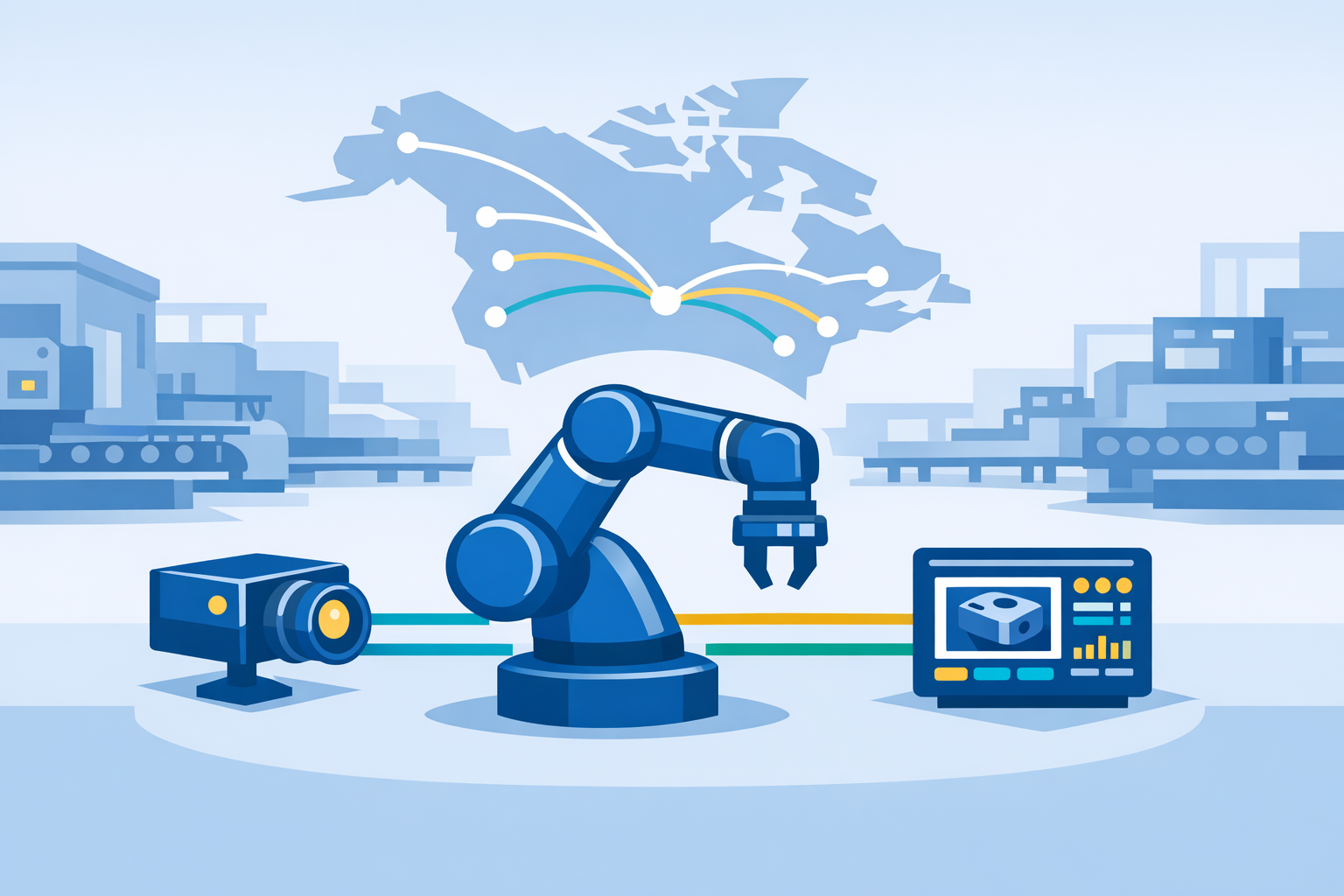
Flex (NASDAQ: FLEX) and Teradyne Robotics announced an expanded cross-vendor partnership on April 22, 2026, aiming to standardize intelligent automation-including AI-driven vision systems-across global manufacturing operations. The move carries direct implications for high-mix metal fabrication shops seeking scalable, interoperable inspection solutions. The collaboration builds on a 20-year relationship in semiconductor test equipment and now extends into cobot and autonomous mobile robot (AMR) deployment at scale.
Background
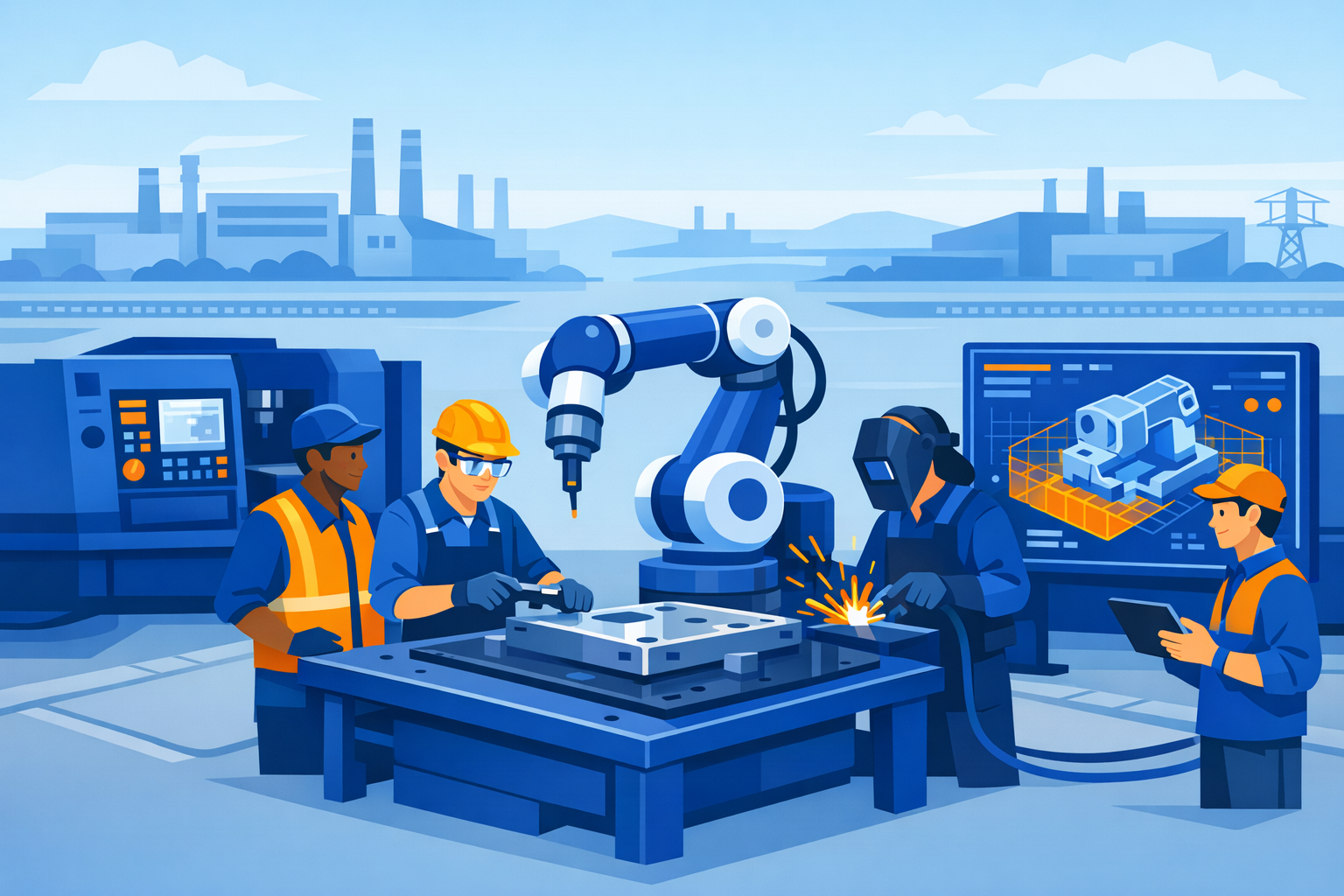
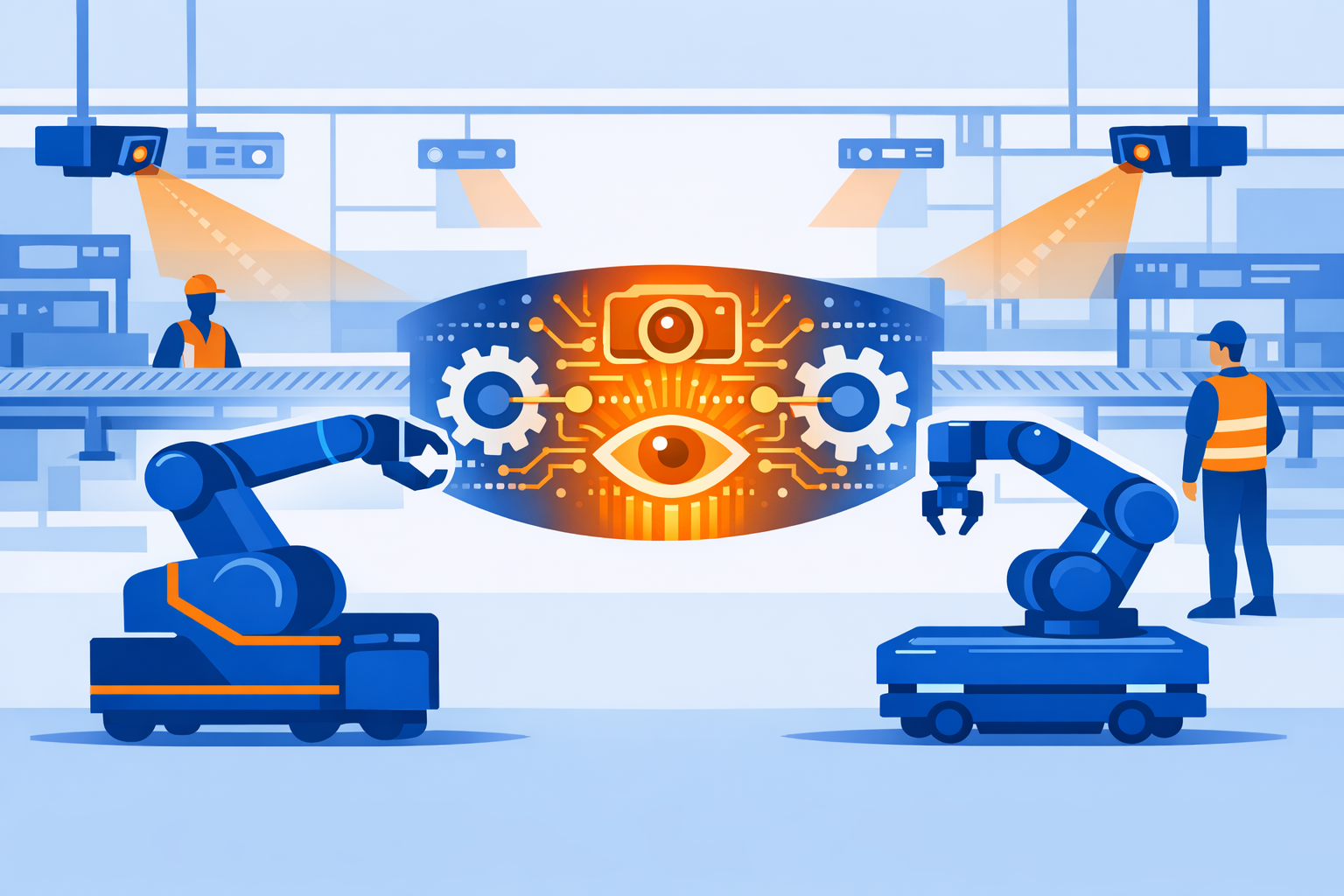
High-mix metal fabrication environments have historically struggled to justify AI vision investments because each new product family demanded bespoke camera configurations, calibration routines, and integration work. The result was islands of automation-functional within a single cell but architecturally incompatible with adjacent lines or sister facilities. As manufacturers adopt AI-enhanced vision systems, standards play a vital role in ensuring interoperability, integration ease, and long-term scalability. Without consistent frameworks, deploying complex machine vision solutions across platforms, devices, and applications becomes time-consuming, costly, and error-prone.
That dynamic is shifting. Manufacturers increasingly use collaborative robots and mobile systems to handle variable production volumes and product complexity. According to Deloitte's 2025 Smart Manufacturing and Operations Survey, 29% of surveyed manufacturers report using AI and machine learning at the facility or network level. Organizations including the Association for Advancing Automation (A3), along with global partners such as EMVA, JIIA, VDMA, and CMVU, have developed and maintained international machine vision standards through the G3 global standards group, designed to simplify integration, reduce costs, and accelerate adoption across manufacturing sectors.
Details
Under the expanded relationship, Flex plays a dual role: deploying Teradyne Robotics solutions within its own production facilities while manufacturing key robotics components that enable scalable automation for Teradyne Robotics customers worldwide. Teradyne Robotics brands Universal Robots (UR) and Mobile Industrial Robots (MiR) are central to the partnership. Flex manufactures key components for UR while deploying its collaborative robots and MiR AMRs in Flex production environments. The combination provides continuous operational feedback and enables faster replication of successful automation workflows.
That feedback loop matters for fabricators evaluating cross-vendor deployments. Integrating deployment and manufacturing capabilities allows automation solutions to be validated under real operating conditions before broader rollout, reducing integration risk and supporting faster scaling across geographically distributed facilities. By combining robotics platforms with Flex's global manufacturing footprint and supply chain infrastructure, the partnership addresses key constraints in automation adoption: system interoperability, deployment speed, and lifecycle support.
On the product side, Teradyne Robotics is integrating emerging physical AI technologies into its collaborative industrial robots and AMRs to help manufacturers address growing operational complexity. Combined with Flex's manufacturing expertise and real-world deployment environments, the two companies say they are accelerating the validation and scaling of more adaptive, intelligent automation solutions capable of responding to dynamic production needs and improving consistency, throughput, and efficiency across applications and global facilities.
Third-party data reinforces the economic case for AI machine vision in high-mix lines. Research from MarketsandMarkets indicates that manufacturers integrating AI into machine vision systems have achieved up to a 25% reduction in defect rates, yielding significant quality control improvements. In robotic welding specifically, the global market is expected to grow from USD 10.38 billion in 2025 to USD 16.87 billion by 2030, at a CAGR of 10.2%. For high-volume spot-weld inspection, Audi reports using AI to analyze approximately 1.5 million spot welds on 300 vehicles each shift at its Neckarsulm site, moving beyond ultrasound random sampling.
Cybersecurity requirements accompany the expanded OT footprint that AI vision creates. IT/OT convergence and AI integration into OT widen the cyber attack surface. According to a Fortinet survey, more than half-52%-of surveyed organizations assigned CISO or CSO responsibility for OT in 2025, up from just 16% in 2022. CISA and the Australian Cyber Security Centre, in collaboration with federal and international partners, published joint cybersecurity guidance for critical infrastructure owners integrating AI into OT systems, outlining four key principles to realize the benefits while reducing risk. Fabricators deploying multi-vendor vision cells across operational networks should treat SBOM tracking and network segmentation as standard program elements, not post-deployment additions.
Outlook
Flex and Teradyne Robotics frame their expanded partnership as a direct route to accelerating physical AI and intelligent robotics deployment across the manufacturing sector. Extending cross-vendor robotics relationships into AI-enabled automation aligns with rising demand for adaptable systems that can operate across distributed manufacturing networks-particularly as production environments shift toward higher product variability and shorter lifecycle cycles. For metal fabrication shops evaluating ecosystem-based vision investments, the Flex-Teradyne model offers an early template for structuring pilot programs: validating workflows in live production before committing to line-wide rollout.