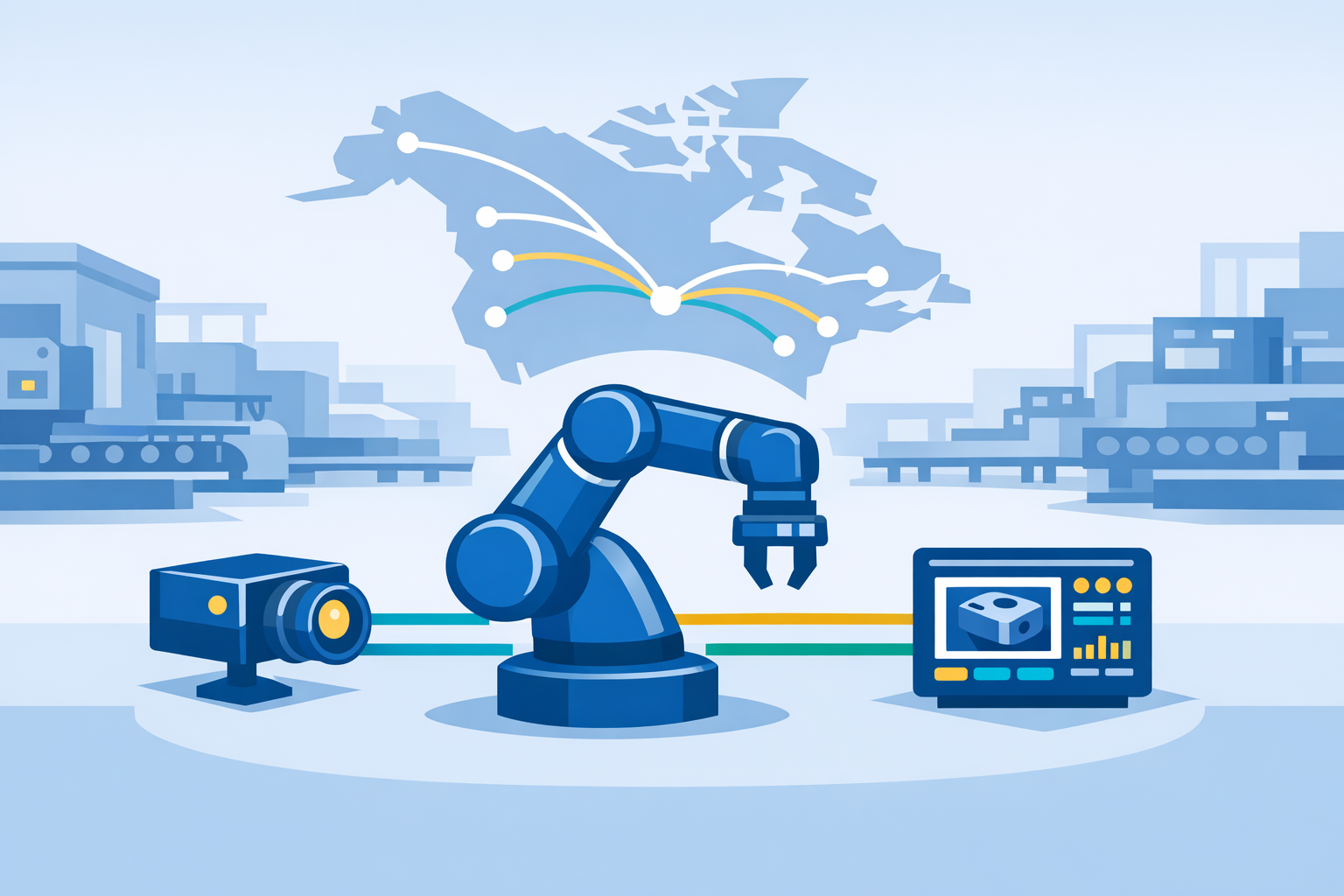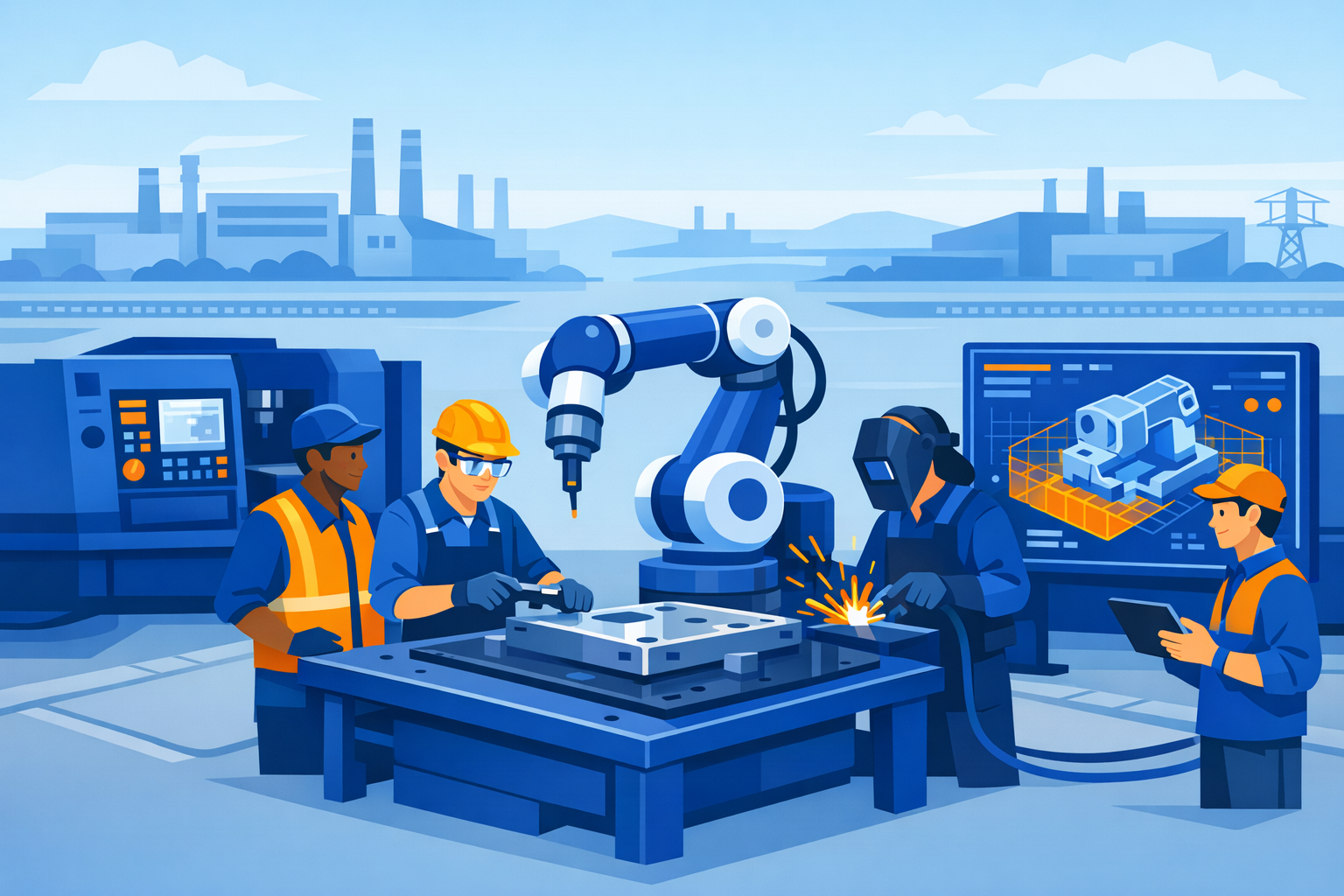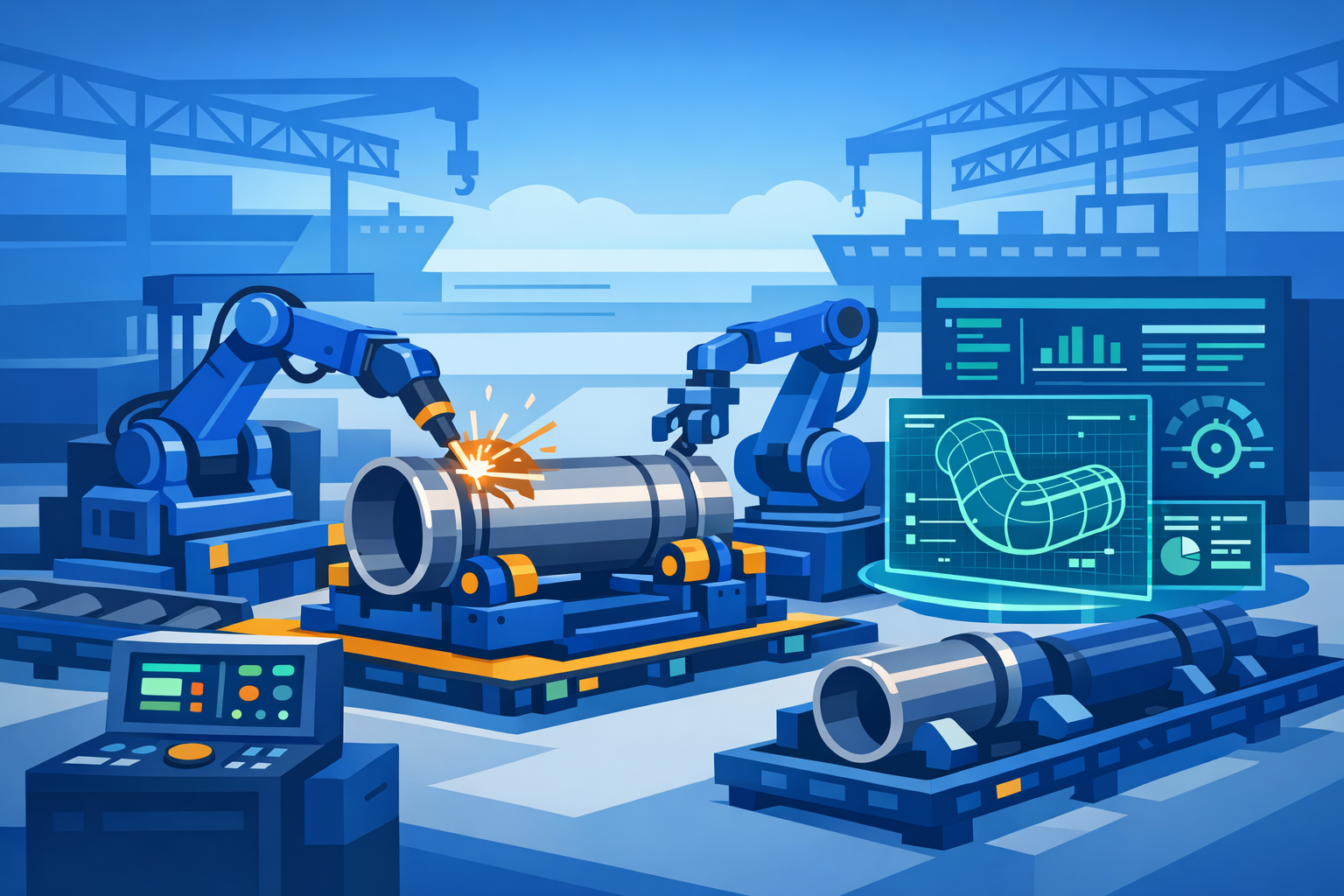
Executive summary. Samsung Heavy Industries (SHI) is integrating robotic pipe welding, automated 3D spool engineering, and smart-yard data platforms to advance pipe-spool fabrication into a highly automated, digitally connected process. This article examines the resulting impacts on productivity, safety, and maritime supply chain coordination-and evaluates how similar strategies could influence shipbuilding automation and digital twin implementation across the industry.
Why Pipe-Spool Fabrication Is Emerging as the Automation Front Line
Pipe spools remain among the most labor-intensive and quality-critical components in shipbuilding and offshore construction. Complex routing, stringent tolerances, and mixed-material specifications make fabrication and inspection challenging.
Common pain points in traditional pipe shops include:
- High manual weld-hours per spool, especially for large-bore or high-alloy lines
- Variable weld quality and rework, dependent on operator skill and fatigue
- Difficult traceability from CAD/CAE models to shop-floor execution
- Safety risks during radiographic testing and confined-space work
- Schedule risk when pipe-spool availability lags block assembly or offshore hook-up
At the same time, offshore projects and LNG carriers continue to increase piping density and complexity. Korean shipyards are responding by prioritizing automated pipe welding and inspection in their smart-yard programs, with SHI specifically highlighting pipe processes as an early automation focus.
Samsung Heavy Industries' Pipe-Spool Automation Stack
SHI has not released a full "pipe-spool line" blueprint, but available data reveals a highly automated pipe fabrication environment combining robotic welding, digital spool engineering, and yard-wide data integration.
Robotic Pipe Welding as the Core of the Line
In June 2024, SHI deployed its Keyhole Plasma Pipe Automatic Welding Equipment (K-PAW) in production.
- For a 24-inch pipe joint, K-PAW reportedly reduces welding time from about 66 minutes manually to approximately 20 minutes, more than tripling throughput[1]
- SHI describes K-PAW as automating root-pass welding for piping-historically one of the most difficult steps to automate in shipbuilding due to joint geometry and quality requirements[1]
This system extends earlier orbital Hot-Wire TIG and FCAW pipe-welding systems at SHI's Geoje yard.
- Previous orbital systems at Geoje achieved welding speeds three to six times faster than legacy methods for large and thick pipe, complemented by internal pipe-cleaning and inspection robots[2]
Combined, these technologies transition a significant portion of pipe-spool girth welds from manual booths into robotic cells that function more like a production line than isolated stations.
Automated Spool Engineering and Paperless Drawings
Automated welding alone does not ensure robust automation. Pipe-spool fabrication becomes highly automatable only when engineering data is machine-readable, consistent, and linked to the shop.
Key initiatives at SHI include:
- In 2020, SHI implemented an automation system for 3D spool and support drawings, replacing largely manual drafting workflows[3]
- From October 2024, SHI will adopt 3D digital drawings for all ship design and construction, becoming the first major yard to target fully paperless drawings[4]
- This transition is expected to eliminate around 600,000 sheets of drawing paper annually and reduce certain design and installation labor costs for LNG carriers by approximately 45%[4]
For pipe-spool fabrication, this enables:
- Direct generation of spool definitions and weld maps from 3D models
- Parameterization of joint geometry, bevels, and weld procedures for robotic cells
- Digital propagation of routing changes or design revisions, reducing errors and scrap
In summary, SHI is establishing the digital backbone required for automated pipe-spool production: structured 3D data, standardized weld definitions, and automated documentation.
Line-Level Automation: Lessons from Robotic Pipe Shops
Industry vendors such as KRANENDONK provide insight into fully automated pipe-spool facilities where all processing steps are integrated.
- A state-of-the-art robotic pipe shop automates cutting, beveling, fit-up, and welding within a coordinated flow, reducing fabrication time to roughly four minutes for many spool types[5]
- These facilities typically feature high-rise storage, automated flange handling, robotic fit-up, and multi-robot welding cells, managed by software that converts CAD models directly into production programs[5]
SHI's advancements in pipe-welding automation, 3D spool engineering, and smart-yard logistics indicate a move toward a fully integrated pipe-spool line, even if equipment and layout specifics are undisclosed.
Quantifying the Impact: Productivity, Quality, and Safety
Pipe-spool automation is altering the economics of outfitting and offshore module fabrication. Data from SHI and automation suppliers provides key benchmarks.
Comparative Performance: Manual vs. Automated Pipe-Spool Welding
| Metric | Conventional manual welding | Robotic/automated line (illustrative) |
|---|---|---|
| Weld time, 24" pipe joint | ~66 minutes per joint | ~20 minutes per joint with K-PAW |
| Typical speed gain | Baseline | ~3× or more vs. manual for selected joints |
| Operator exposure to radiation | High (external radiography, repeats) | Reduced via in-pipe inspection robots and fewer RT shots |
| Programming effort | N/A (manual) | Automated from CAD/PCF; no manual robot teaching needed |
| Spool throughput (pipe shop) | Several man-hours per spool | Minutes per spool in fully robotic pipe shops |
The 66- vs. 20-minute comparison for a 24-inch pipe weld is from SHI's K-PAW demonstration, while "minutes per spool" reflects performance claims from advanced robotic pipe shops.[1]
Quality and Rework
Automated systems deliver consistent travel speed, heat input, and joint preparation. When paired with automated fit-up and beveling, this results in:
- Narrower variation in weld bead geometry and penetration
- Reduced repair rates on high-alloy and cryogenic piping
- More predictable NDE outcomes and enhanced schedule reliability
Although yards rarely publish exact repair-rate reductions, industry practice indicates double-digit percentage drops in rework as operations shift from manual to robot-centric welding for repetitive joints.
Safety and Workforce Utilization
Pipe-spool work involves significant safety risks, including hot work in confined spaces and radiographic testing.
- SHI employs robots that travel inside pipes for cleaning and internal radiographic inspection, reducing radiation exposure and speeding up inspection cycles compared to external-only X-ray workflows[6]
- Robots perform repetitive strain tasks such as overhead welding and heavy spool rotation, allowing skilled workers to focus on programming, supervision, and complex repairs.
For plant management, the combined gains in throughput and risk reduction support positioning pipe-spool automation as a core automation domain.
Digital Integration: From Pipe Shop to Offshore Logistics
An automated pipe-spool facility delivers maximum value when integrated within a broader maritime digitalization strategy connecting engineering, fabrication, logistics, and operations.
Yard-Wide Visibility with Smart-Yard Platforms
Samsung Heavy Industries is advancing toward a smart-shipyard model under its "Smart SHI" initiative.
- SHI introduced a data-driven Enterprise Integrated Monitoring System, "SYARD," aggregating information across the shipbuilding process in near real time[7]
- Earlier efforts include a metaverse-based remote quality inspection system, interactive design assistants, and production enabled by 3D models and digital twins.
Applied to pipe-spools, these platforms enable:
- Real-time tracking of spool status across fabrication stages
- Integration of pipe-shop queues with block assembly and module activities
- Early alerts when material, design changes, or inspection outcomes affect offshore schedules
Digital-Thread Alignment with Digital Twins
Digital twin strategies aim to connect digital and physical data for both ship and shipyard.
- Major maritime digitalization initiatives-at SHI and peers such as HD Hyundai-are employing digital twins to link design, production, and lifecycle data, with goals of full process validation via simulation by 2030[8]
In pipe-spool fabrication, the digital thread includes:
- Assigning each spool a unique identity linked to the ship's 3D model
- Capturing weld parameters, NDE results, and coating data as structured attributes
- Making data accessible for commissioning, maintenance, and class documentation
Projects in Europe and Asia have implemented robotic pipe fitting and welding cells guided directly by CAD models within digital twin frameworks. For example, the EU PeneloPe project demonstrated a high-payload robotic cell and digital twin platform automatically assembling large pipes for shipbuilding and offshore construction, showcasing closed-loop, model-driven fabrication.[9]
Interoperable Data Standards in the Maritime Supply Chain
To realize the benefits of an automated pipe-spool facility across the maritime supply chain, standardized data exchange is essential.
- The IHO's S-100 framework and ISO 19848 for shipboard data provide the foundation for harmonizing maritime digital information, enabling interoperability among vendors and systems[10]
For pipe-spool fabrication, this means:
- Using open formats (e.g., ISO-based schemas, PCF/IFC variants) for spool definitions and status
- Making weld and inspection data machine-readable for use by yards, owners, and classification societies
- Allowing offshore contractors to integrate yard spool data with project management systems
Implications for Maritime Supply Chains and Standards
Automated pipe-spool facilities at major yards like SHI have several implications for suppliers, partners, and regulators.
Shift from Labor Capacity to Digital and Automation Capability
Historically, yards have scaled output by:
- Increasing weld booths and fit-up stations
- Subcontracting spool fabrication
- Expanding overtime during peak workloads
With robotics, constraints shift to:
- Automated cell and robotics availability
- CAD/CAM integration maturity
- Quality of production data and scheduling systems
Third-party fabricators for maritime projects will increasingly be evaluated on automation compatibility-the ability to accept digital spool packages, provide structured weld/NDE data, and align with yard standards-rather than just labor costs.
Regulatory and Class Considerations
As robotic welding and automated inspection expand, classification societies and regulators are refining requirements for:
- Qualification of automated welding procedures and parameter ranges
- Data retention for robotic weld logs and in-pipe inspection records
- Cybersecurity and integrity of digital twins used in class-related documentation
SHI's use of secure digital solutions-such as blockchain-backed ship data logging-demonstrates how digital assurance may expand to fabrication data.[11]
Logistics and Just-in-Time Spool Delivery
In offshore and large-vessel projects, improved spool scheduling can:
- Reduce buffer inventories of critical spools
- Enable more reliable sequencing of module loadouts and heavy lifts
- Support just-in-time strategies, lowering storage and handling risk
To achieve this, offshore logistics teams require structured visibility into pipe-shop progress-precisely the data that smart-yard and automated spool facilities provide.
How Competing Yards Are Responding
SHI is not alone in developing smart-yard and robotic pipe-fabrication capabilities.
- HD Hyundai's shipbuilding group is building a unified digitalized production platform with automation and digital twin functionality spanning design to manufacturing, with support from leading software partners.[12]
- Korean and global peers are deploying carbon-steel pipe welding robots, automated and semi-automated machines, and collaborative robots to address labor shortages and ensure weld consistency.[13]
Nonetheless, SHI's combination of:
- Advanced pipe-welding automation (K-PAW and orbital systems)
- Paperless, model-driven engineering and spool detailing
- Yard-wide monitoring and digital twin platforms
makes its pipe-spool operations a visible benchmark for smart shipyards and maritime digitalization.
For fabrication engineers, SHI's progress highlights the value of treating pipe-spool automation and digital integration as interconnected priorities rather than separate initiatives.
Actionable Takeaways for Metalworking and Fabrication Leaders
For plant managers, production supervisors, and engineers considering similar investments, practical steps include:
Target high-value pipe families.
- Prioritize large-bore, high-alloy, and high-volume spools where weld-hours and rework are concentrated.
- Deploy initial robotic cells and process development in these categories for optimal impact.
Strengthen digital spool definitions.
- Standardize 3D modeling, weld numbering, and joint attributes.
- Ensure design software can export consistent, machine-readable data for robotic work preparation.
Integrate NDE and inspection automation.
- Assess internal inspection robots, digital radiography, and automated reporting.
- Link NDE results to each spool's digital identity for traceability and class compliance.
Connect pipe-shop execution with broader schedules.
- Use dashboards or MES links to share spool status with assembly and logistics teams.
- Drive more accurate milestones and prevent late spool bottlenecks.
Align with emerging data standards.
- Monitor and adopt relevant maritime data standards where possible.
- Structure fabrication data for integration with vessel digital twins and owner systems.
Plan for workforce transition, not replacement.
- Retrain experienced welders as robot cell operators, programmers, or quality inspectors.
- Capture shop-floor expertise within welding procedures and parameter libraries.
By treating pipe-spool automation as both a robotic fabrication task and a digital integration project, metalworking and fabrication organizations are better positioned for the next phase of shipbuilding automation and maritime digitalization.
Frequently Asked Questions
What is meant by a "fully automated" pipe-spool fabrication line?
A fully automated line integrates cutting, beveling, fit-up, and welding into a coordinated process executed by robots and machines, guided by data from 3D models. Operators oversee supervision, maintenance, and exception handling rather than manual welding. Advanced systems automatically generate routing, weld parameters, and inspection points from CAD or PCF files and send instructions directly to robotic work cells.
How does robotic pipe-spool fabrication differ from conventional pipe shops?
Conventional shops depend on manual fit-up and welding, using drawings or isometrics for guidance. Robotic fabrication organizes work around automated cells that receive digital spool data, execute joint preparation and welding, and log parameters and results. The constraint shifts from skilled labor to automation capacity and data integrity.
What prerequisites are needed before investing in robotic pipe-spool facilities?
Critical prerequisites include:
- Uniform 3D piping models and spool definitions
- Standardized weld procedures and joint geometries compatible with automation
- Reliable material handling and clamping fixtures for the intended diameter range
- Foundational MES or production-tracking systems to integrate cell outputs into schedules
Lacking these, automation cells may remain isolated rather than integrated within a smart-yard framework.
How do digital twins relate to pipe-spool fabrication?
Digital twins in shipbuilding maintain synchronized digital and physical records for both the vessel and key yard processes. For pipe-spool fabrication, the digital twin holds authoritative data on each spool's geometry, materials, welds, NDE history, and installation context. Robotic cells use information from the twin to perform fabrication, reporting back process and quality data for downstream commissioning and analytics.
What kind of ROI can shipyards expect from pipe-spool automation?
Return on investment varies by project scope and labor costs. However, data from K-PAW and advanced robotic pipe shops shows that 3× or greater weld-time reductions on select joints, coupled with lower rework and improved safety, can significantly shorten payback periods for high-utilization cells. Shipyards integrating automation with paperless spool engineering and smart scheduling typically achieve the strongest returns, due to more predictable project delivery and reduced schedule risk.