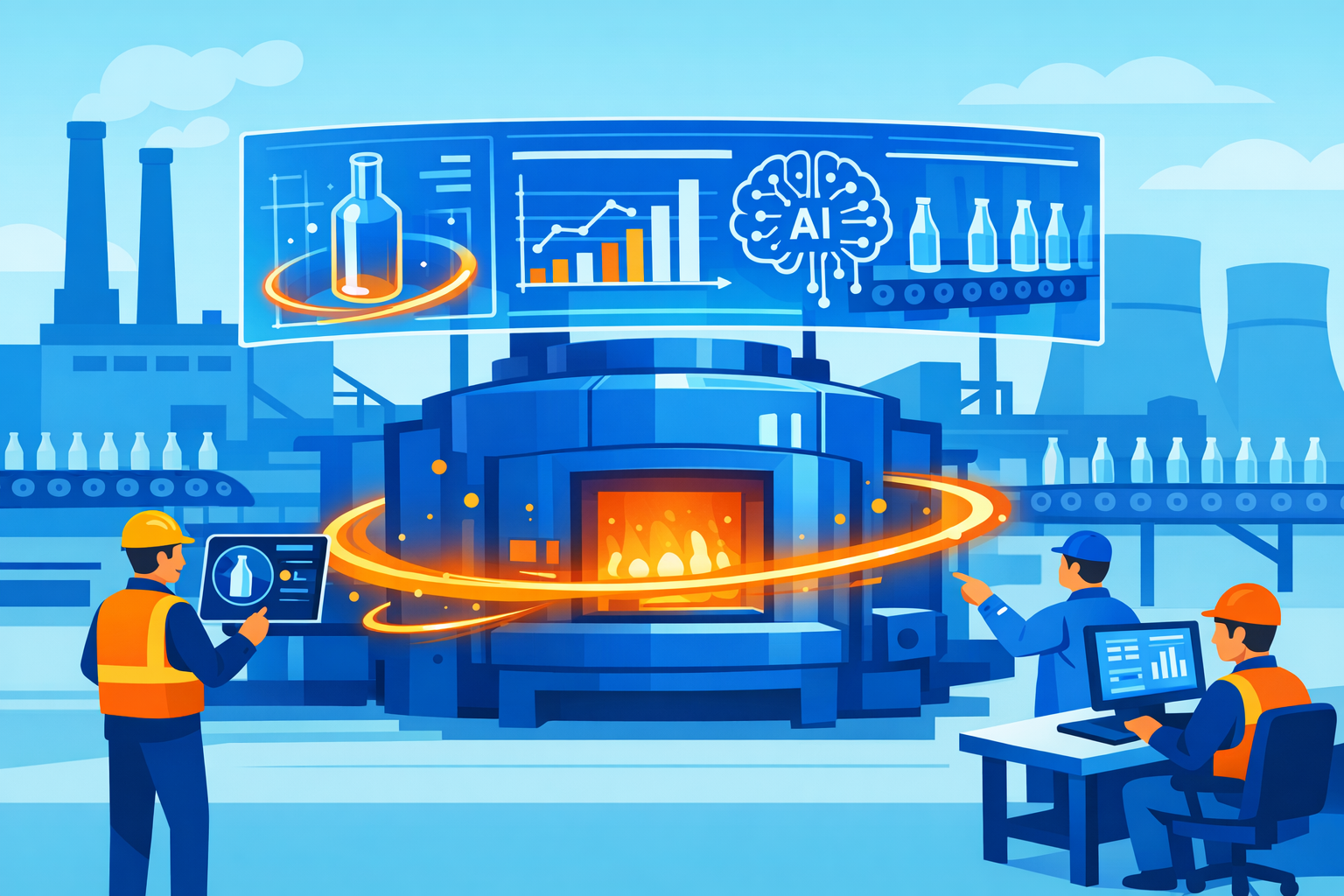
U.S. glass fabrication plants are adopting AI-enabled defect detection and real-time process monitoring to reduce waste, decrease energy consumption, and improve yields during forming, annealing, and tempering. Recent pilot projects have reported notable reductions in furnace cycling, scrap, and energy use. Operators now work alongside AI inspection systems and digital twins, signaling a move toward intelligent manufacturing in the glass industry.
Background
Glass manufacturing is highly energy-intensive, with furnaces consuming most of a facility's energy. Even a 1-2% gain in thermal efficiency can equate to millions in annual savings and substantial CO₂ reductions, particularly in high-volume sectors such as architectural and automotive glass. AI-enabled systems that monitor furnace parameters in real time and adjust settings dynamically are emerging as key solutions for improving efficiency without sacrificing product quality. Digital twins-virtual models of physical assets-support these improvements by simulating thermal and process behaviors. This enables optimization before changes are implemented on the production floor.
Details
Recent pilot deployments of AI-driven quality control systems have achieved defect detection rates above 95%, reducing scrap and rework, especially in precise segments like automotive and architectural glass. In some cases, defect-related waste dropped by over 10% annually, yielding direct cost savings. Predictive analytics combined with inspection systems have increased equipment effectiveness and stabilized output, industry reports from AGC and Saint-Gobain confirm. AI models analyzing temperature profiles, fuel-to-air ratios, and batch composition have allowed real-time burner adjustments, improving thermal efficiency by an estimated 3-5% in pilot tests and reducing NOₓ and CO₂ emissions by up to 10% through advanced combustion control.
Digital twins have further accelerated these improvements. By processing sensor data through virtual plant models, they help identify energy waste and support early fault detection. Manufacturers using energy-focused digital twins in other industries have achieved carbon emission reductions of up to 50% and operational efficiency gains of as much as 35%, indicating significant promise for similar adoption in glass plants.
Operators are adjusting to AI-driven workflows. Manual inspection of glass for defects is being replaced by oversight of AI systems that flag anomalies using deep learning. This transition requires updated training, as staff shift from routine inspection to diagnostics and system intervention. Safety and reliability remain priorities; digital twins allow simulation of AI behavior under stress, supporting safer rollout in high-temperature, energy-intensive settings.
Outlook
As pilot programs scale, glass manufacturers aim to extend AI-enabled defect detection and energy optimization to additional processing lines. Suppliers of sensors, AI modeling, and digital twin platforms are expected to expand their role in the value chain, fostered by demonstrated returns in waste and energy reduction. These trends are likely to accelerate as sustainability mandates harden and profit margins remain challenged.