U.S. Glass Plants Accelerate AI Defect Detection with Digital Twin Energy Savings
A number of U.S. glass manufacturing facilities have launched pilot programs integrating AI-driven defect detection with energy-focused digital twins, resulting in reduced scrap rates and significantly lower energy use. Backed by recent grants, these pilots deploy hybrid digital twin systems to simulate furnace control changes and optimize annealing schedules for improved efficiency and quality. Rising energy costs and stricter quality standards have prompted small and mid-sized glass producers to adopt advanced automation to sustain competitiveness.
Background
Glass manufacturing is characterized by high thermal energy demands and strict quality tolerances, creating ongoing challenges related to energy consumption and scrap. This so-called "glass trifecta"-energy intensity, quality control, and productivity-poses notable pressures for flat glass producers. Hybrid digital twins, which combine physics-based simulation with real-time plant data, enable virtual testing of process modifications before physical implementation. Industry leaders such as Siemens and Ansys have introduced these technologies in other high-temperature sectors, reporting reductions in energy use and defect rates.[1]
Details
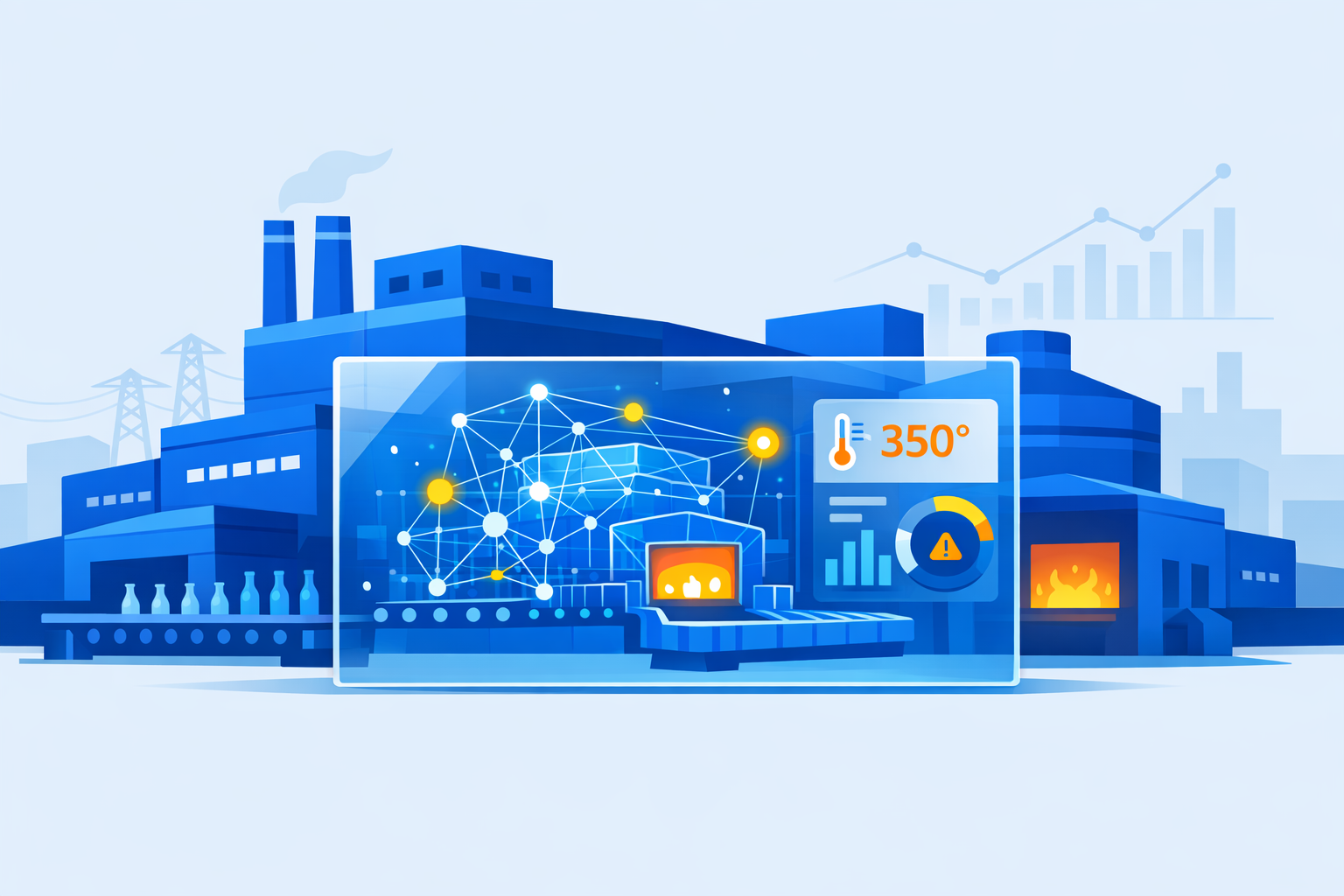
In one pilot, a mid-sized U.S. plant implemented a reduced-order model (ROM) digital twin to oversee forehearth temperatures above 1400°C. The digital twin featured virtual sensors that detected temperature deviations and alerted operators when parameters fell out of tolerance, allowing for corrective action before defects occurred-all within five seconds per cycle.[2]
Another trial used an energy-optimized digital twin, linking Python-based control logic via OPC UA to a heating tunnel. This setup delivered energy savings of up to 40% during heating processes.[3] Combined results from these pilots include scrap reductions of 20-30% and near 50% decreases in energy consumption. Internal reports indicate that local deployment brought return on investment to under one year.
These initiatives have received support from U.S. Department of Energy programs. The Industrial Decarbonization Roadmap highlights glass manufacturing due to its energy intensity and projected growth, directing RD&D grants to foster digital twin adoption.[4]
Outlook
Pilot facilities are set to expand digital twin integration to entire furnace-to-annealing lines and train AI models for defect detection across quality inspection systems. Broader adoption among small and mid-sized manufacturers is possible with further DOE grants and dissemination of best practices.