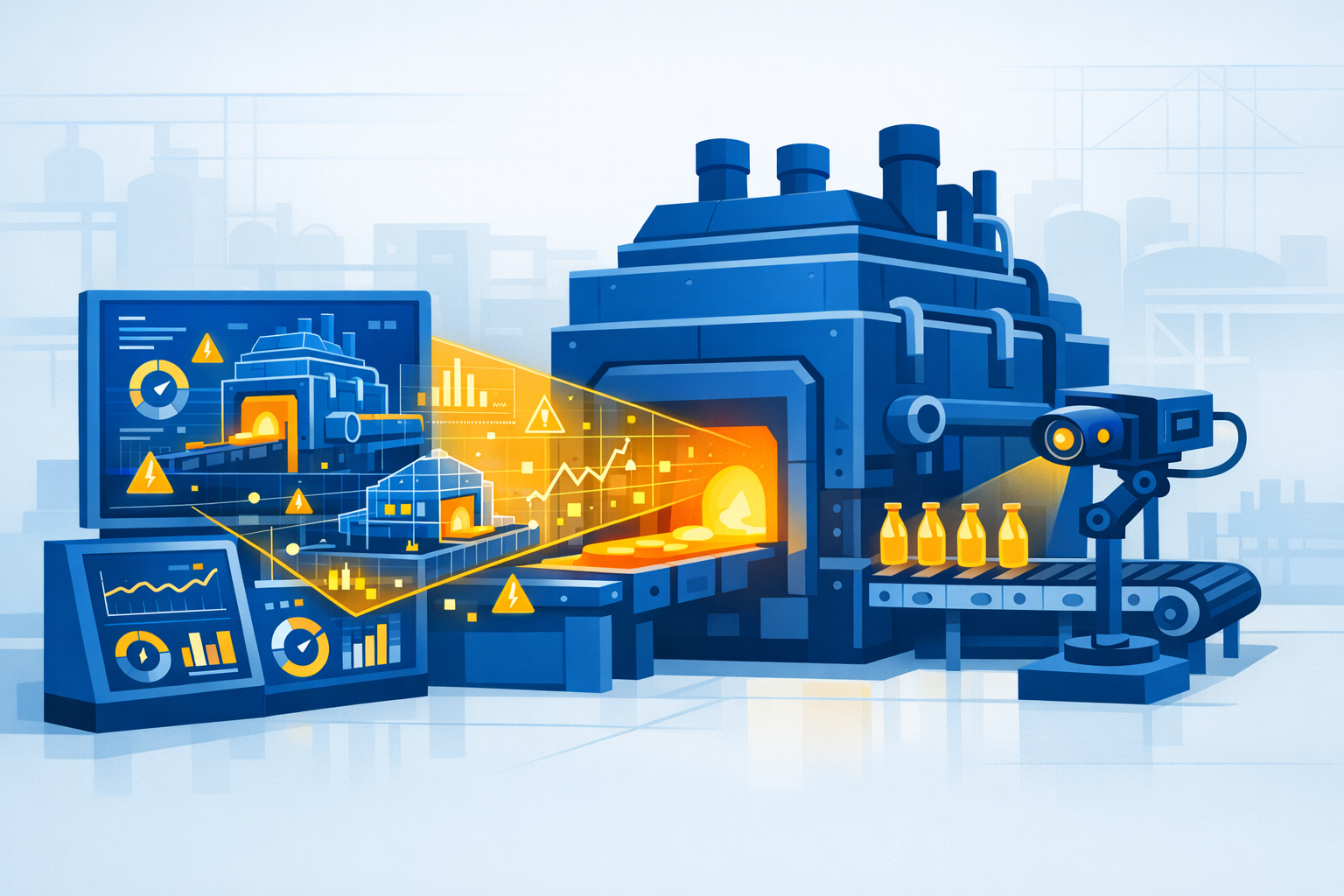
Several U.S. flat glass fabrication facilities have launched pilot programs employing AI-powered defect detection integrated with digital twins to monitor furnace operations, annealing, and cold-end finishing. Initiated earlier this year, these efforts aim to reduce scrap rates and energy consumption without affecting production throughput, utilizing machine vision, anomaly detection, and predictive maintenance tools. Recent U.S. environmental regulations on energy reporting are accelerating the adoption of digital upgrades across melting, forming, and finishing processes.
Background
Industrial glass production demands significant energy, especially during melting and annealing. Quality control is challenging due to the material's transparency and reflectivity. Current AI-enabled machine vision systems can accurately classify defects such as inclusions, scratches, and bubbles at line speeds, allowing for reliable in-process quality control. Digital twins-virtual models of physical production lines-simulate furnace temperature, pressure, and energy use, enabling operators to predict optimal setpoints and identify deviations before they affect quality or energy efficiency.
Details
A case study of an AI-based digital twin deployment in a glass furnace reported 1-3% energy savings, a 3-5% throughput increase, and revenue gains of USD 1-3 million at a typical 60-ton-per-day facility. The system offered real-time monitoring, anomaly detection, and forecasting of critical parameters such as furnace temperature, pressure, oxygen concentration, and specific energy consumption. IIoT data and predictive analytics supported recommendations for optimal operating setpoints while maintaining quality thresholds. The deployment also created a more consistent temperature profile, reducing average furnace temperatures to save energy while sustaining output. This case study utilized Performance 360™ by SymphonyAI Industrial.Energy savings of 1-3 %, throughput increase of 3-5 %, and USD 1-3 million revenue impact per 60 TPD plant were reported in the case study; the system forecasted furnace conditions and optimized controls via predictive models leveraging IIoT and AI digital twins According to the study sponsors, integration included fuel flow, air-fuel ratio, electric boosting setpoints, and variables such as gas composition, cullet ratio, and moisture content.The digital twin used variables including fuel flow setpoint, air-fuel ratio, electric boosting setpoints, furnace temperatures and pressures, oxygen levels, gas composition, cullet ratio, and moisture content to model operations and recommend optimal control paths (Case Study, SymphonyAI Industrial)
Parallel programs along finishing lines are implementing machine vision platforms with multi-class defect detection, identifying scratches, bubbles, chips, cracks, and stains in real time. These platforms provide instant classification, trend analysis, and traceability, and integrate with MES for comprehensive reporting and monitoring.AI-based systems identify and classify defects such as surface scratches, chips, cracks, bubbles, inclusions, edge defects, stains, and delamination in real time, enabling traceability and trend analysis for quality control (Robovision). Industry-wide surveys indicate AI algorithms in glass manufacturing yield average energy savings of 20%, a 25% reduction in production errors, a 30% decrease in downtime via predictive maintenance, and a 70% increase in throughput for adopters.Across the glass industry, AI implementation has resulted in an average of 20 % energy savings, 25 % reduction in errors, 30 % less downtime, and 70 % higher throughput according to sector surveys (ZipDo Education Reports 2025).
Workforce and Regulatory Implications
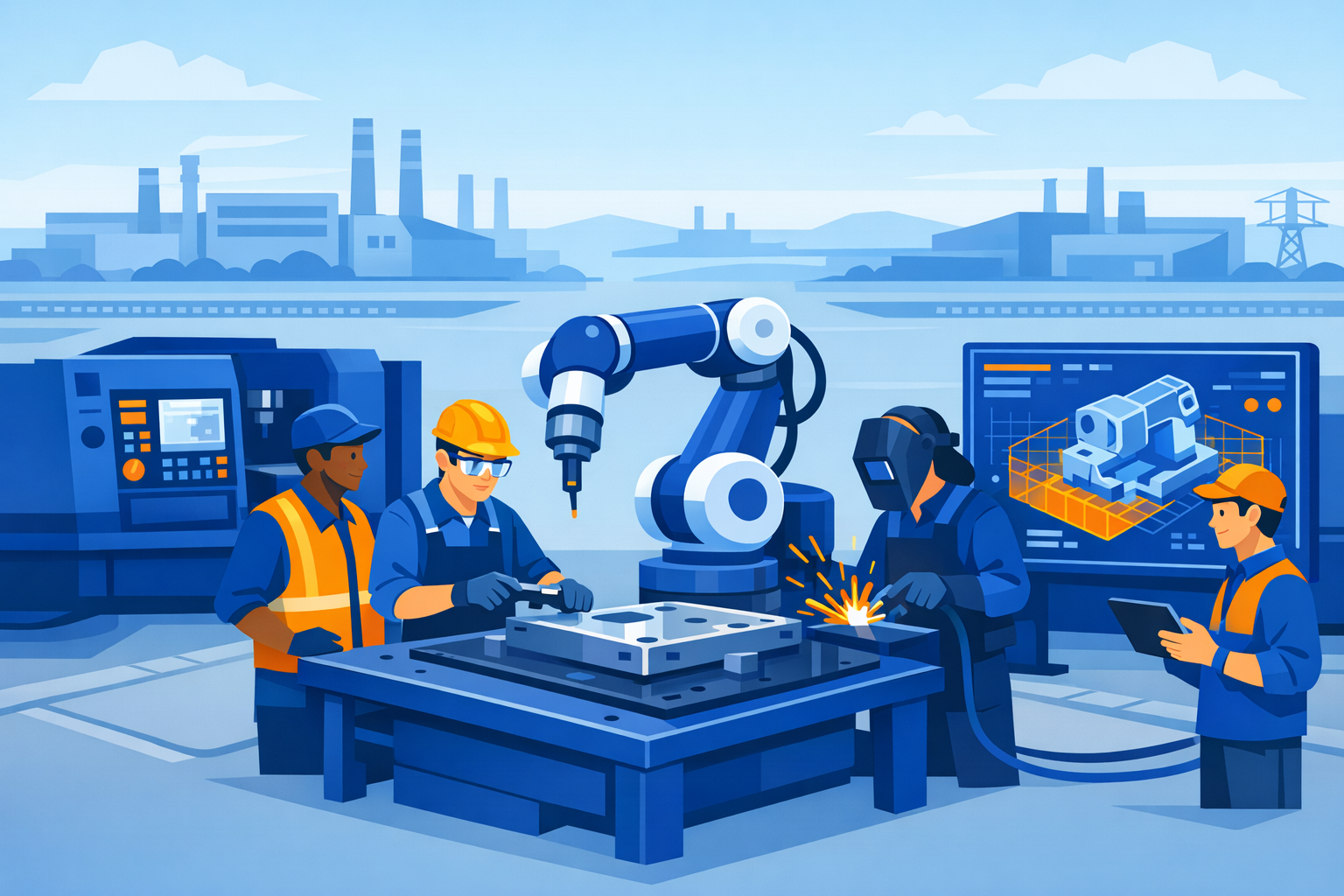
Adopting these technologies is driving manufacturers to upskill employees in data analysis, digital control, and predictive maintenance. Technicians and engineers now require training in AI model management, digital twin operation, and advanced sensor diagnostics. Regulatory mandates-especially those for energy and greenhouse gas reporting-are accelerating adoption of transparent, data-driven controls to document energy consumption and support operational efficiency improvements.
Outlook
If pilot projects continue to demonstrate reductions in scrap and energy use while maintaining throughput, manufacturers are likely to scale these technologies across additional furnaces and finishing lines. Broader adoption could enable enterprise-level automation, real-time energy benchmarking, and centralized analytics across U.S. glass manufacturing clusters.