U.S. glass fabrication plants are adopting AI-based defect detection and digital twin simulations to enhance yield, reduce waste, and lower energy consumption. Producers of architectural, consumer packaging, and specialty glass are integrating plant-wide vision inspection systems with energy management and predictive maintenance platforms to improve efficiency across various production lines. Regulatory requirements and sustainability mandates are driving implementation, with pilot programs showing clear gains in overall equipment effectiveness (OEE).
Background
Glass manufacturing has traditionally been energy-intensive, with melting furnaces accounting for up to 75% of total plant energy usage. Energy costs comprise as much as 14% of production expenses, making small efficiency improvements economically significant. Industry 4.0 technologies-including AI, digital twins, and IIoT-are being introduced to improve quality control, energy efficiency, and supply-chain resilience. Hybrid furnaces using both electric and gas heating, along with AI-driven energy management systems, such as those piloted by Libbey and O-I Glass, reflect an industry-wide move toward decarbonization and automation. Regulatory frameworks and ESG commitments continue to strengthen these trends.
Details
At container glass plants producing approximately 300 tons per day, IIoT-enabled energy optimization-including combustion tuning, electric boost management, regenerator performance monitoring, and furnace pull-rate matching-can achieve energy savings of 8-20%. This translates to annual energy cost reductions of $500,000 to $2.4 million. Energy savings of 8-20% of energy cost for a 300 TPD container glass plant have been demonstrated through IIoT energy-optimization measures. Energy costs for such plants range from USD 6-12 million annually. Libbey's Ohio plant is replacing four regenerative furnaces with two hybrid electric furnaces, projected to cut carbon emissions by around 60% and use up to 80% renewable electricity. Additionally, O-I Glass has implemented an AI-powered energy management system in the U.K. combined with battery storage, expected to reduce CO₂ emissions by 240 tons annually. Libbey's furnace conversion is projected to reduce carbon emissions by approximately 60% and leverage up to 80% renewable electricity. O-I Glass's AI-energy management system in the U.K. is projected to save 240 tons of CO₂ each year.
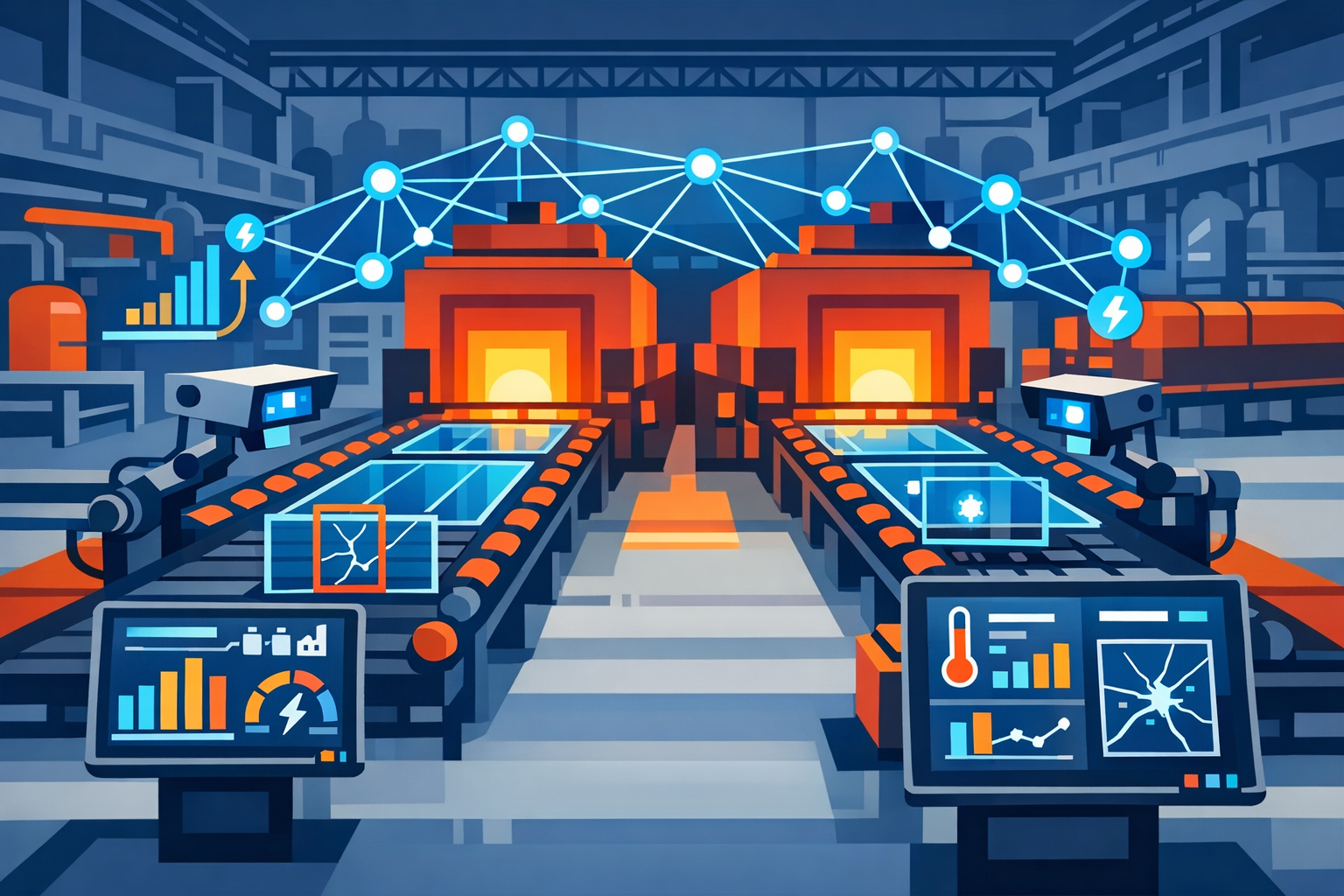
For quality control, companies such as AGC have installed AI-driven vision systems that detect defects with over 95% accuracy, lowering scrap and rework, and reducing defect-related waste by more than 10%, ultimately improving OEE. AGC's automated inspection achieved better than 95% detection accuracy and reduced defect-related waste by over 10%. Academic research supports these advancements: new vision-based systems using AI models such as YOLO and Gaussian Mixture Model preprocessing are being tested to automate glass part and defect detection within smart manufacturing environments.
Digital twins and hybrid models that combine data-driven and physics-based approaches are providing real-time process insights and energy optimization. Across manufacturing sectors, digital twins have achieved energy savings of 10-20% and operational cost reductions of 10-25%. In glass production, Energy Digital Twins are in development for smart manufacturing, and virtual furnace simulations are supporting process tuning and maintenance planning.
Outlook
Glass producers are expected to expand AI inspection and digital twin energy management from pilot programs to full-scale operations. Adapting these systems to varied glass chemistries, line speeds, and legacy infrastructure will be essential. Regulatory incentives and carbon pricing are likely to accelerate investment in hybrid and all-electric melting systems. Ongoing technical validation and workforce training will be necessary to advance AI-driven automation and maintain production stability.