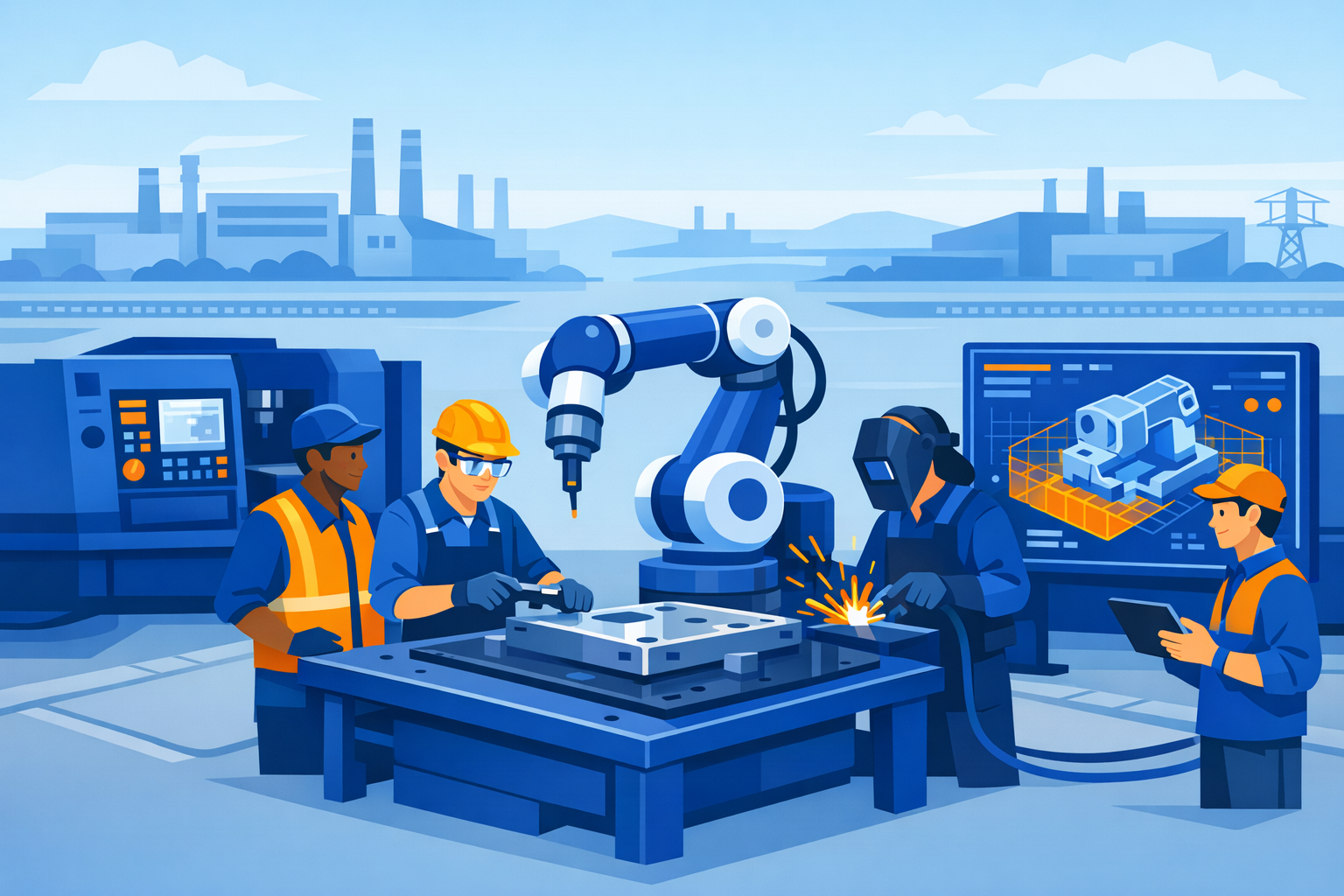
A new wave of vision-guided automation is enabling high-mix metal fabrication lines to boost throughput while maintaining quality through real-time defect detection and seamless integration with control systems. Recent deployments in shipyards and fabrication shops have demonstrated AI-powered perception systems monitoring tolerances and defects, interacting directly with PLCs and MES to trigger immediate corrective actions. Early signs of return on investment include reduced rework, faster changeovers, and improved yields in mixed-product runs.
Background
Metal fabrication operations often manage a wide range of product variants with stringent tolerances, challenging traditional rule-based inspection systems. Deep learning-based vision technology offers superior adaptability to surface and lighting changes while maintaining high sensitivity to genuine defects, overcoming the limitations of static vision rules in high-mix environments. These AI-enabled systems are increasingly integrated into MES architectures, supporting closed-loop quality control and real-time decision-making.
Details
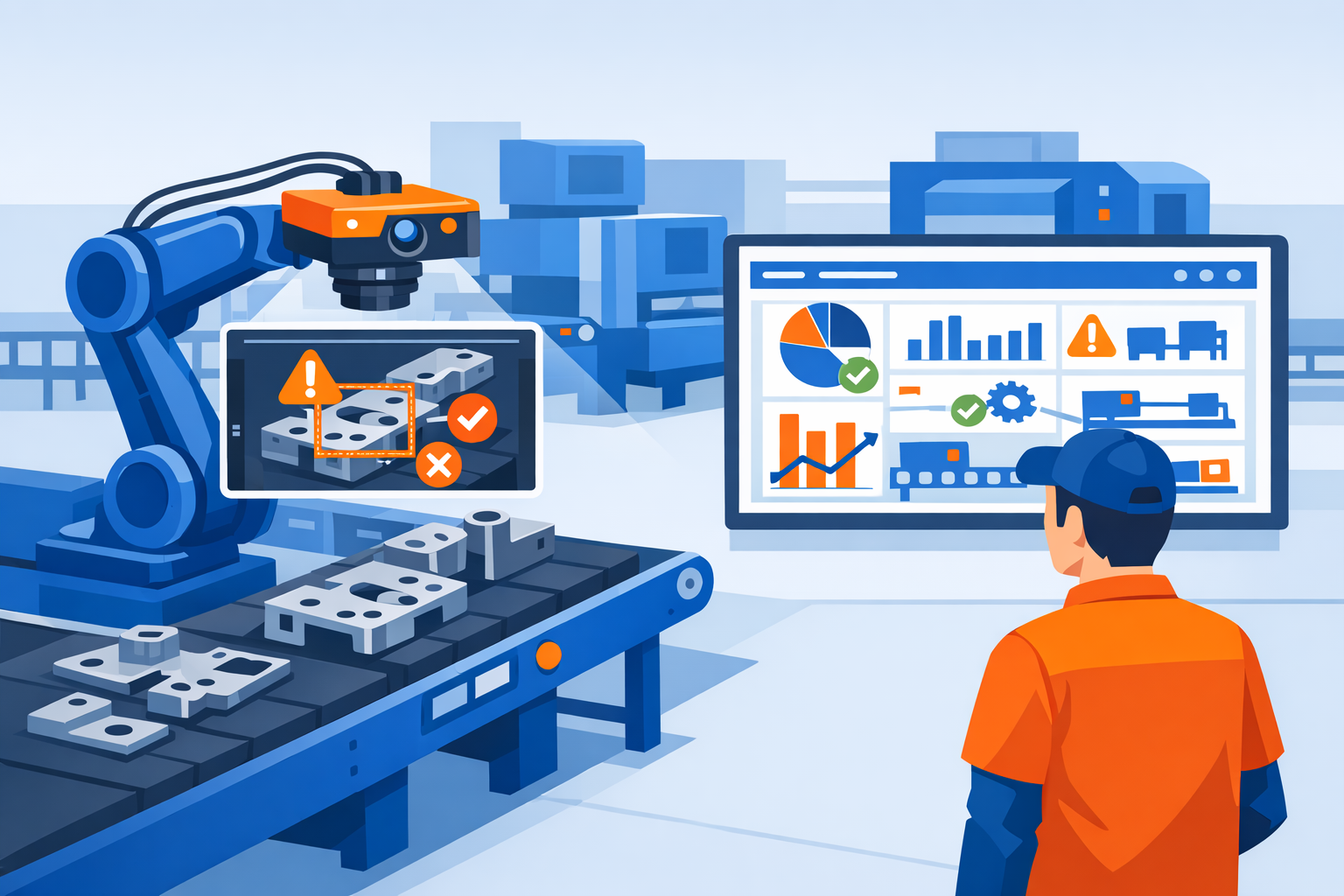
In high-speed production environments, where throughput exceeds 1,200 units per minute, AI vision systems integrated natively with PLCs have achieved inspection-to-rejection latencies under 15 ms, reducing false rejects from 3% to 0.1%. This has enabled system deployment within days, as demonstrated in a case study of AI vision with PLC integration. In one deployment, when line speed increased by 20% in the previous quarter, the vision system maintained performance without modification. MES integration further enhances traceability by linking inspection images and results to lot IDs, supporting closed-loop control with PPAP and FAI documentation.
Edge-based vision models have achieved 99.8% accuracy while processing up to 5,000 parts per minute. On-device inference removes cloud latency and updates defect analytics on shop-floor dashboards every two seconds. Meanwhile, AI-driven MES modernization has enabled vision models to tag genealogy data and feed defect signals back into process control, allowing immediate parameter adjustment or triggering rework for prompt corrective action.
These solutions have delivered measurable ROI. In one European deployment, organizations adopting AI reported a projected 30% productivity increase by 2026. In high-mix welding and machining, reductions in scrap and rework have been noted along with faster changeover times. Improved optical inspection accuracy has enabled skilled workers to focus on higher-value QC tasks.
Outlook
As more fabrication shops implement vision-guided automation, integration with digital twins and generative MES tools is expected to enhance process simulation and decision support. AI agents within MES may soon not only identify defects but also suggest parameter adjustments and dynamically reschedule production. These advances are expected to further reduce changeover times and increase yields in complex, high-mix fabrication.