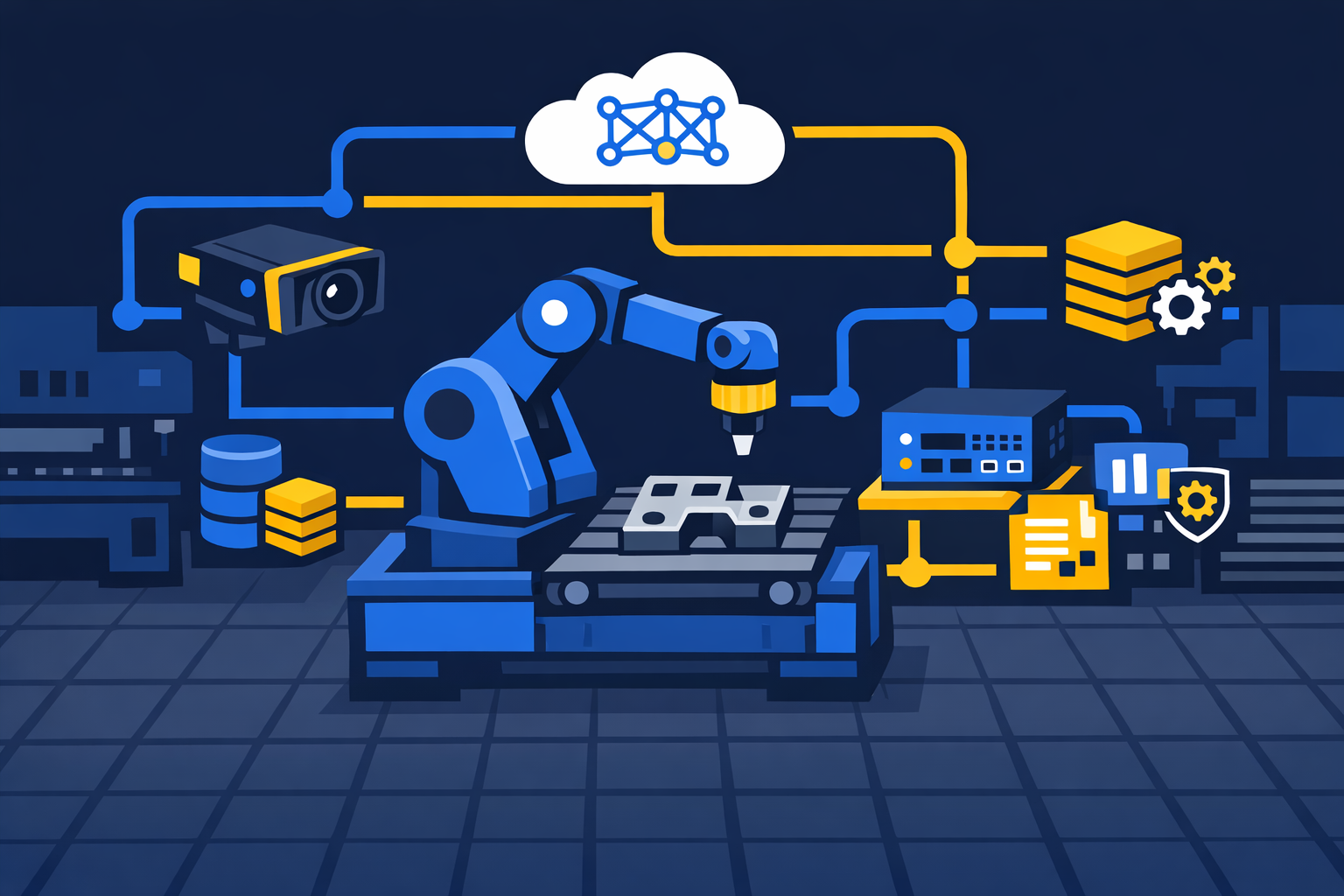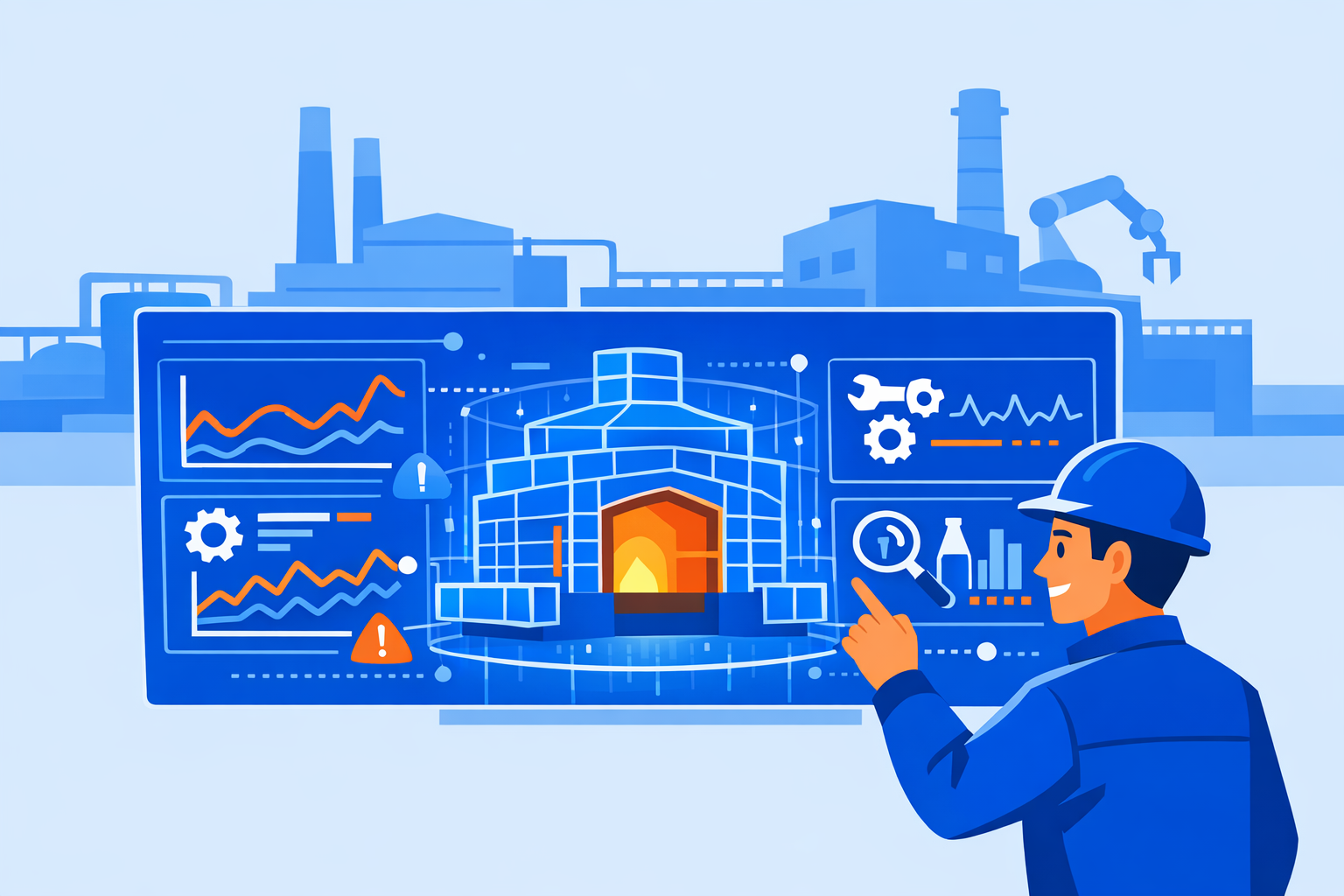
U.S. glass manufacturers have initiated pilot projects involving AI-driven process control, digital twins, and predictive maintenance. Early results indicate reductions in energy consumption, scrap rates, and operational risk. These pilots began in late 2025 and continued into early 2026 at various container, flat, and specialty glass facilities. The initiatives focus on optimizing furnace parameters, automating defect inspection, and forecasting equipment wear to deliver measurable improvements in energy efficiency, quality control, and safety.
Background
Energy consumption in U.S. glass manufacturing totals approximately 200 petajoules annually, with melting furnaces ranking among the most energy-intensive assets in the industry. Furnace melting accounts for up to 90% of total energy use in certain furnace types, with specific consumption ranging from 7.2 GJ per tonne for container glass to 18 GJ for specialty glass products[1]. AI and digital twin technologies offer improved control and modeling of these thermal processes, enabling real-time optimization and fault prediction.
Details
Pilot plants have deployed AI-driven furnace control systems that integrate digital twin simulations with live operational data. According to the Glass Manufacturing Industry Council (GMIC), machine learning models are now adjusting furnace operations and anticipating maintenance needs, resulting in reduced fuel usage and waste. GMIC noted that a comparable AI energy management system in the U.K. cut carbon emissions by approximately 240 tonnes annually when implemented with battery storage[2].
Automated vision-based inspection has also been trialed, utilizing machine vision to detect surface defects such as bubbles and scratches and to adjust forming parameters in real time. GMIC reported that increasing the use of recycled cullet by 10% achieved an estimated 3% energy savings and a 7% reduction in emissions, while predictive-control furnaces delivered additional gains in energy efficiency and yield[2].
AGC, in its 2025 ESG briefing, confirmed the development of a digital twin for glass melting furnaces that channels live process data into an online simulation. This digital twin is used for operational optimization, with projected benefits including up to 30,000 hours of reduced inspection time annually through automation and anomaly detection[3].
Outlook
Manufacturers plan to extend these pilots through mid-2026, aiming for further energy savings, improved uptime, and reduced scrap. If pilot programs prove successful, sector-wide adoption could support compliance with energy efficiency regulations, advance sustainability targets, and benefit supply chains in construction, automotive glazing, and electronics.
Future adoption timelines depend on integration with existing process control systems and workforce training on AI-enabled technologies.