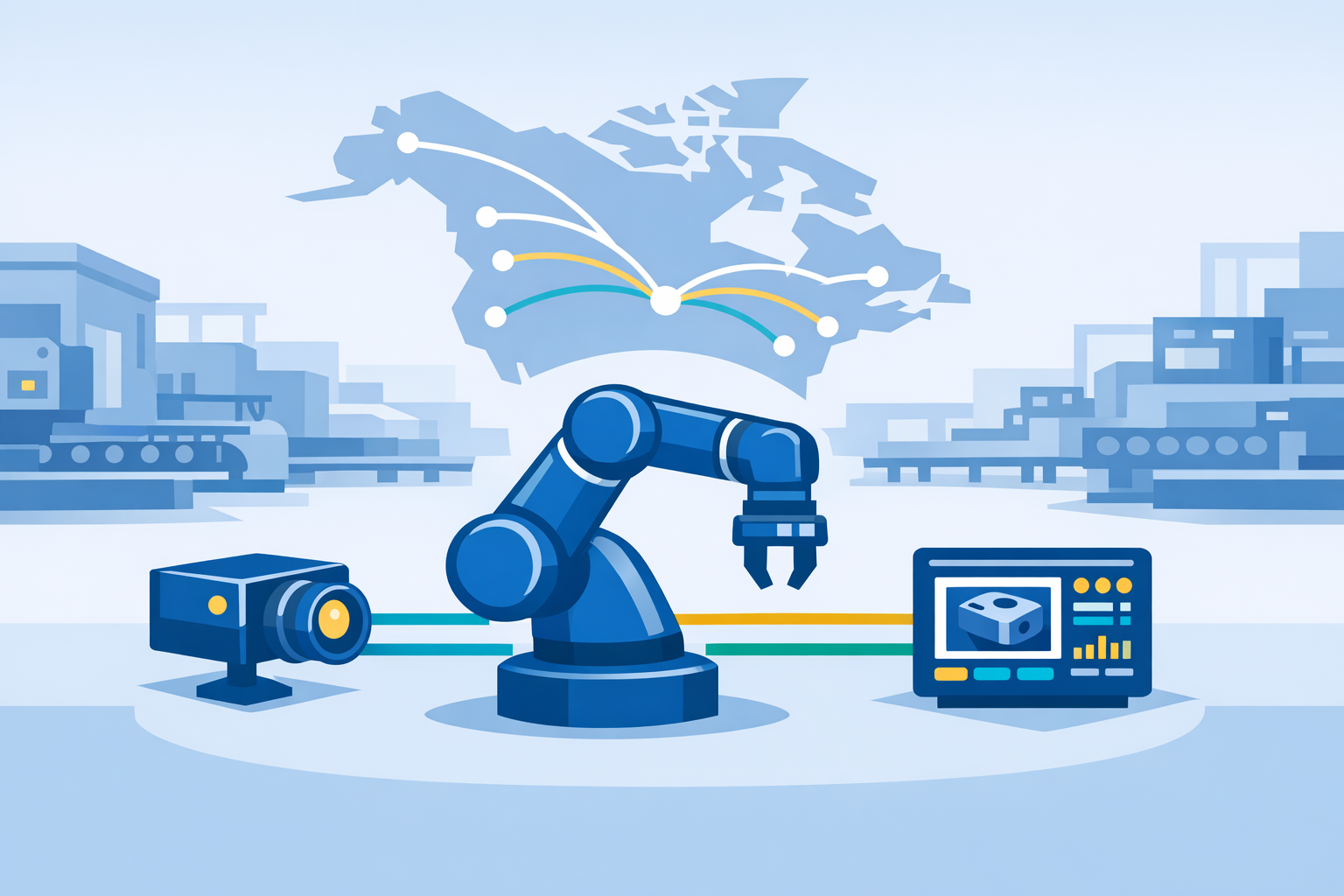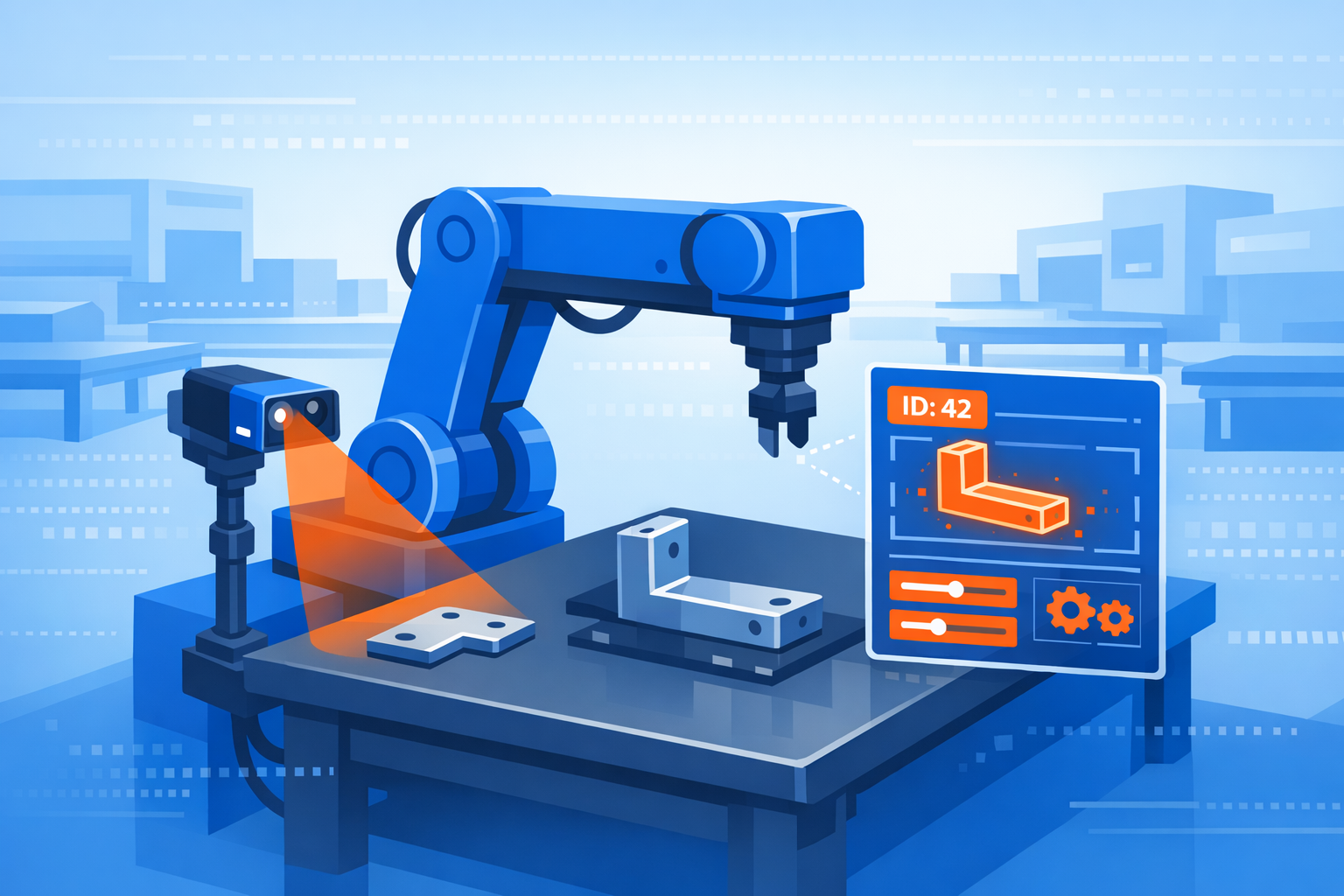
A growing number of metal fabrication shops are deploying vision-guided automation to accelerate changeovers, reducing setup times and boosting flexibility in high-mix production environments. These systems use AI-enabled vision to switch between part programs-via barcode scanning, RFID, or AI-based part recognition-in under one second, eliminating the need for operator intervention, according to recent industrial deployments. This automation enables rapid adjustments for diverse part types and complex sequences, minimizing downtime and raising throughput.
Background
Manufacturers face challenges with frequent changeovers in high-mix environments, as manual procedures can prolong setups and introduce quality variation. In high-SKU operations, nighttime changeover inefficiencies can triple, with associated losses reaching hundreds of thousands of dollars due to prolonged downtime. Vision-guided automation addresses these issues by delivering live, automated control over changeover routines. Use of interoperable machine vision standards-including GenICam, GigE Vision, USB3 Vision, and OPC UA companion specifications-ensures cross-vendor compatibility and plug-and-play installation. These standards enable the system integration and flexibility modern fabrication lines require.
Details
Vision systems combine high-resolution imaging with deep learning models trained on CAD data or labeled parts to instantly identify part types. Upon identification, the system automatically loads the correct tooling parameters or program, allowing tools, fixtures, or welding routines to adapt without manual input. For dimensional inspection, vision systems measure multiple critical features within 200 milliseconds, with repeatability of ±0.05 mm, and trigger compensation after detecting a few defective parts. Operators experience reduced manual workload, with increased throughput and reduced rework.
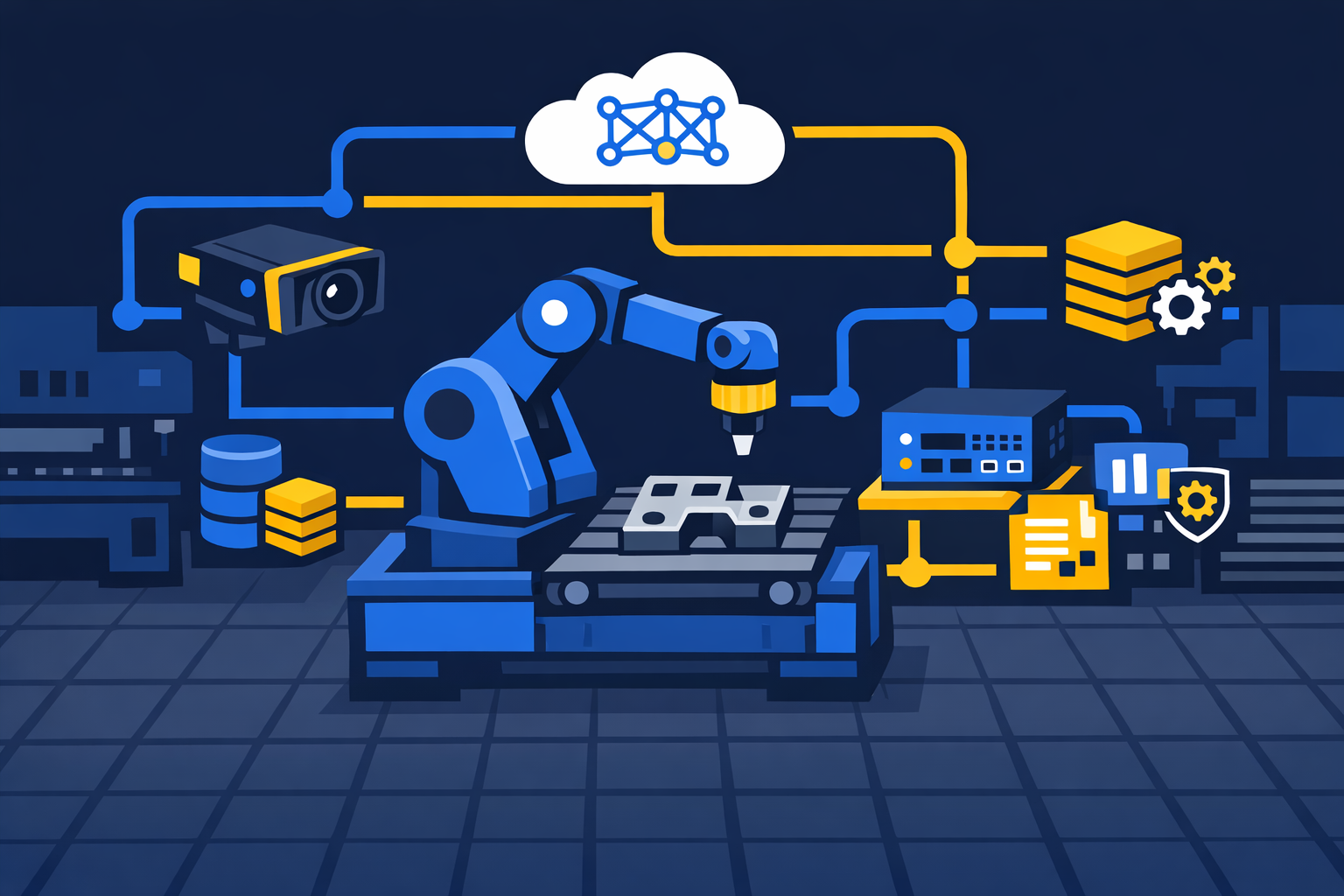
Interoperability relies on standards from organizations such as AIA, EMVA, and VDMA. GenICam and protocols like GigE Vision and USB3 Vision abstract hardware differences, facilitating integration across products from different manufacturers. The OPC UA Machine Vision Companion Specification standardizes recipe, result, and configuration management while enabling modularity for vendor-specific extensions. This standards-based approach supports multi-vendor environments, improving flexibility and future-proofing systems.
Outlook
As fabrication shops increasingly embrace high-mix production, vision-guided automation is expected to become a core enabler of rapid changeover and quality assurance. Continued standardization will likely further ease cross-vendor deployment. Future implementations are projected to focus on deeper MES and PLC integration, supporting comprehensive recipe automation and real-time monitoring across production lines.